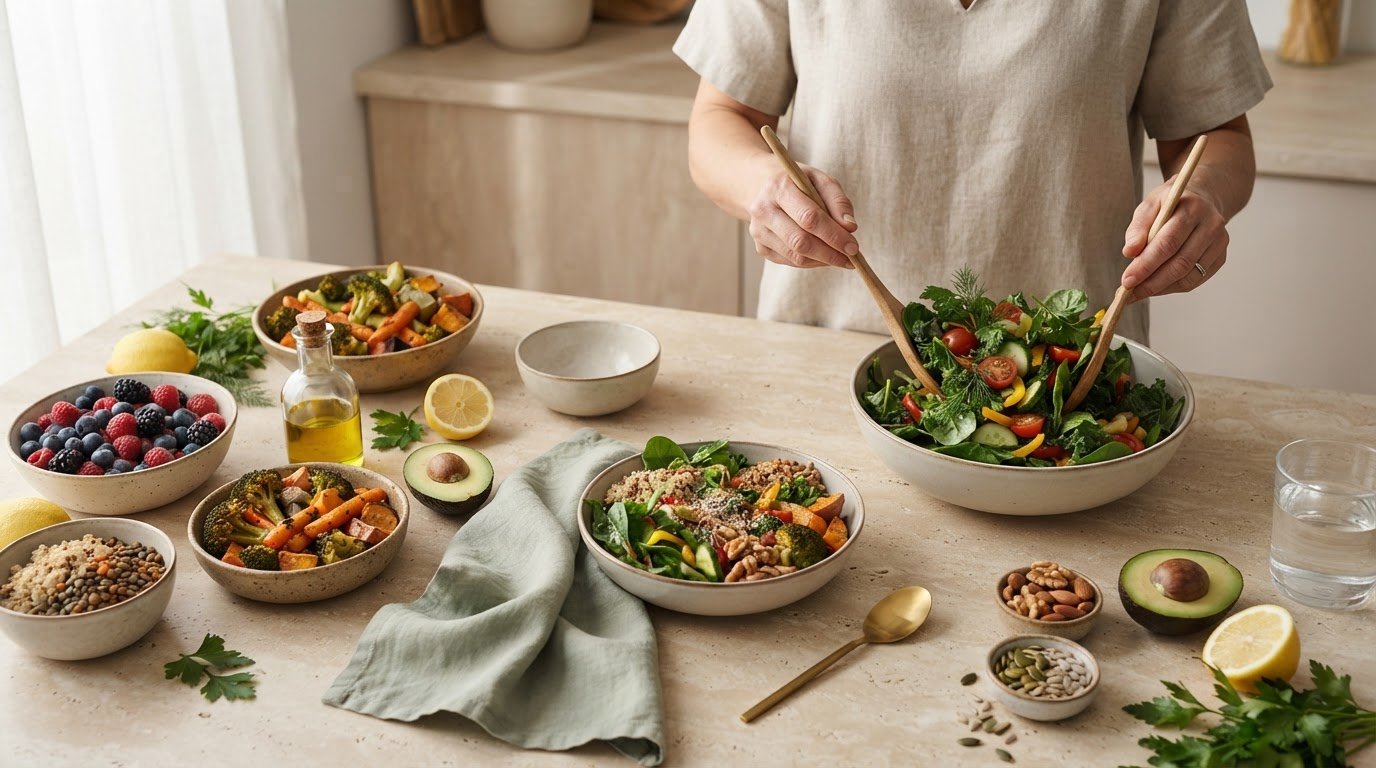
Anti-Inflammatory Diet for Hashimoto's and Skin Problems: How to Eat Mindfully?
October 16, 2026 · 16 min read
When dealing with Hashimoto's and skin changes, do you need to immediately eliminate gluten, dairy, and other products? Not necessarily. An anti-inflammatory diet for Hashimoto's and skin problems begins not with a long list of restrictions, but with balanced meals and a careful search for the root causes of your symptoms. Skin changes can have various origins, so it is not wise to assume they are a result of thyroid disease from the outset.
If you feel lost among conflicting advice, that is understandable. Nutrition can support your daily well-being, but it does not replace diagnosis or treatment for Hashimoto's. In this article, you will learn the principles of a diet based on diverse, minimally processed foods. You will also find out why eliminating gluten or dairy is not necessary for everyone.
We will look at how to compose meals, what to pay attention to with skin changes, and when to consult a specialist about your diet or symptoms. Without promises of a quick transformation, but with a focus on health, balance, and choices tailored to you.
Key Takeaways
- An anti-inflammatory diet for Hashimoto's and skin problems is based on a varied menu, not a single "superfood".
- Compose your meals with vegetables and fruits, whole grains, protein sources, and fats.
- Instead of changing your menu based on every piece of advice, observe your tolerance for products and introduce adjustments gradually.
- Keep a record of what you eat and how you feel. Such notes will help you discuss your observations with a specialist.
- Choose supplements based on your situation, and seek help from the right specialist when evaluating symptoms.
Table of Contents
- What an Anti-Inflammatory Diet for Hashimoto's and Skin Problems Can and Cannot Do
- What Makes Up an Anti-Inflammatory Menu for Hashimoto's?
- Eliminations for Hashimoto's: Is It Necessary to Give Up Gluten and Dairy?
- How to Plan Daily Meals for Hashimoto's and Skin Problems
- When to Seek Support and How to Approach Supplementation Wisely
What an Anti-Inflammatory Diet for Hashimoto's and Skin Problems Can and Cannot Do
The term "anti-inflammatory diet" describes a way of composing daily meals, not a separate therapy with a universal menu. An anti-inflammatory diet for Hashimoto's and skin problems means making conscious food choices, not a method of treatment. Its foundation is varied nutrition that helps provide the body with necessary components. However, it does not guarantee an improvement in skin appearance or remove the cause of the autoimmune disease.
Diet supports daily nutrition, but it does not replace medical treatment. With Hashimoto's, it is worth treating your way of eating as an element of caring for your overall health, alongside medical care. This approach helps to avoid both promises of quick results and restrictions introduced without individual indications.
How is Hashimoto's Related to Inflammation?
Hashimoto's is an autoimmune disease affecting the thyroid gland. The immune system mistakenly identifies thyroid cells as a target and directs its reaction against them. This process can affect the gland's function, but it does not mean that every ailment in the body is a result of "inflammation" or that it can be treated with diet. You can find more information about Hashimoto's thyroiditis in the encyclopedia.
In common language, the word "inflammation" is often used very broadly. It is important to distinguish it from a specific disease process, diagnosed based on medical evaluation. An anti-inflammatory diet for Hashimoto's and skin problems can support proper nutrition, but it does not switch off auto-aggression, "cleanse" the thyroid, or replace therapy recommended by a doctor. Do not stop or change your treatment on your own based on nutritional advice.
Do Skin Problems Always Result from Hashimoto's?
No. Dryness, redness, itching, rashes, or changes in skin texture can have various causes. The appearance of the changes alone does not allow one to determine whether they are caused by Hashimoto's, diet, an allergy, a nutrient deficiency, or another health problem. Do not diagnose them based on a list of symptoms found online or introduce several eliminations at once.
If a change persists, worsens, or appears for the first time, consult a doctor. Depending on the situation, the assessment can be started by a general practitioner, who may refer you to a dermatologist. For diagnosed Hashimoto's, discuss issues related to thyroid function with your primary physician. A dietitian can help evaluate your menu and plan its modifications, but does not replace medical diagnostics.
Observe your symptoms instead of automatically attributing them to a single product or disease. Write down when the changes appeared and how they are evolving. During a consultation, also mention any medications you are taking and changes in your diet. This is a more useful starting point than a restrictive menu chosen without identifying the cause.
What Makes Up an Anti-Inflammatory Menu for Hashimoto's?
A good menu is not based on a single ingredient or a rigid list of "good" and "bad" products. What matters is variety and a meal rhythm that you can maintain daily. In practice, an anti-inflammatory diet for Hashimoto's and skin problems is not a ready-made plan, but a flexible way of combining different food groups. Information from the U.S. National Institute of Diabetes and Digestive and Kidney Diseases also indicates that there is no specific diet that treats Hashimoto's.
A variety of products is the foundation of a balanced menu. It makes it easier to include different food groups and avoid making choices dependent on single "superfoods". Understood this way, an anti-inflammatory diet for Hashimoto's and skin problems can match your daily preferences, without a revolution on your plate.
What Product Groups Should Be Included Daily?
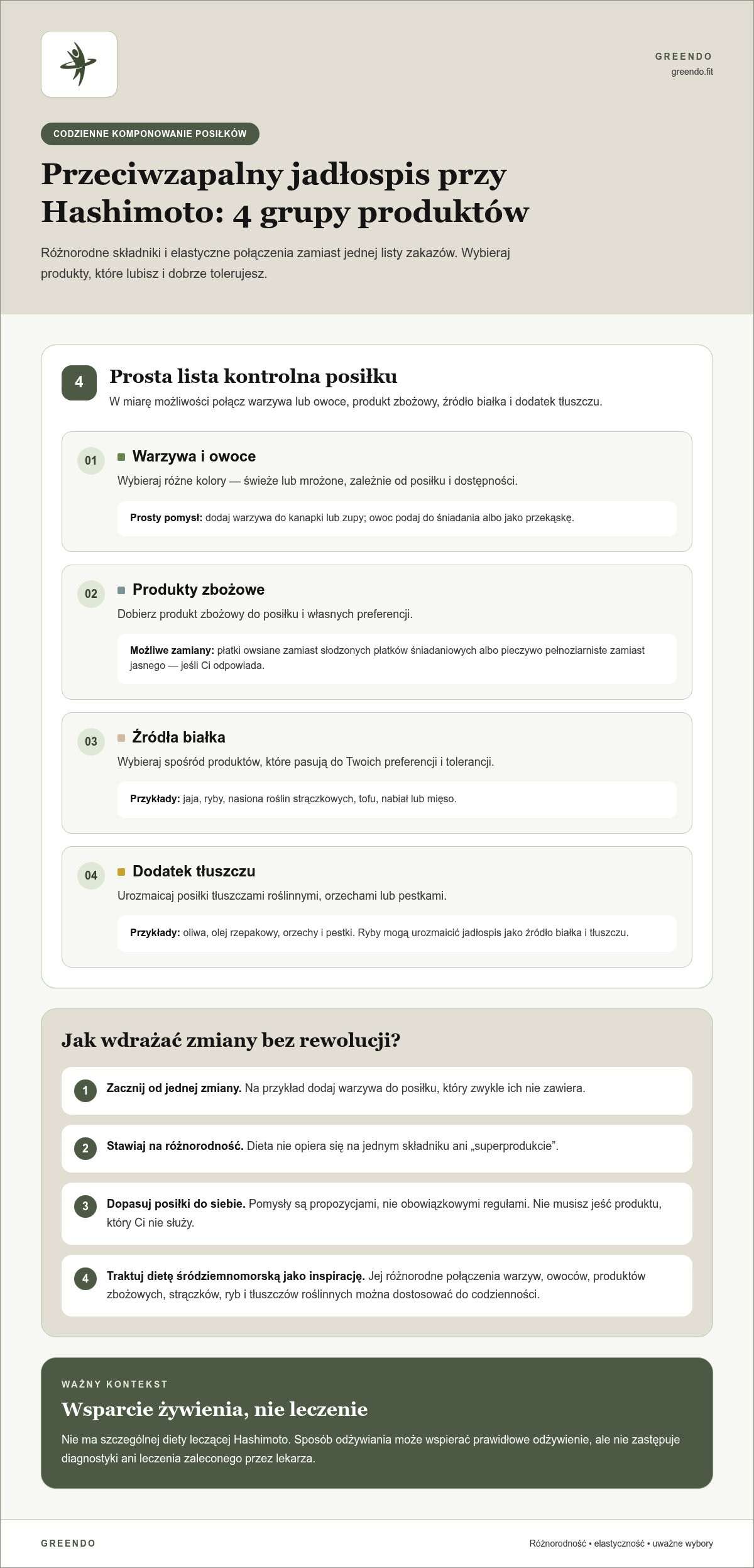
Choose vegetables and fruits in various colors, fresh or frozen, depending on the meal and availability. Add a source of protein, a grain product, and a source of fat. This composition is flexible and works well for both a hot dish and a simple meal prepared in advance.
- Vegetables and fruits: add vegetables to a sandwich or soup, and serve fruit as part of breakfast or a snack.
- Grain products: choose oatmeal instead of sweetened breakfast cereals or whole-grain bread instead of white, if you like it.
- Protein sources: include, for example, eggs, fish, legumes, tofu, dairy, or meat. Choose them according to your preferences and tolerance.
- Fats: use olive or rapeseed oil, nuts, and seeds. Fish can diversify your menu as a source of protein and fat, but they do not cure the disease on their own.
You could, for example, swap white bread for whole-grain or add fish or legumes to a dinner with vegetables. These are suggestions, not mandatory rules. If a specific product does not agree with you, you do not have to eat it just because it appears in a popular menu. Introduce changes in a way that your meals remain practical and meet your needs.
Can the Mediterranean Diet Be a Practical Model?
It can be an inspiration, not a ready-made protocol to be strictly followed. Its strength lies in its diversity: vegetables, fruits, grain products, legumes, fish, and plant-based fats appear in many different combinations. You do not have to prepare exotic dishes or copy the menu day by day.
Adapt the ideas to what you like, tolerate well, and can incorporate into your daily life. Start with one change, for example, add vegetables to a meal that usually does not contain them. If you are considering supplementing your diet with protein and collagen, Forever Young is a 2-in-1 formula that combines whey protein isolate with bovine collagen hydrolysate. It also contains vitamin C, biotin, and coenzyme Q10. It does not replace whole meals or medical treatment. You can find more information in the description of this supplement that supports a daily diet.
Eliminations for Hashimoto's: Is It Necessary to Give Up Gluten and Dairy?
A diagnosis of Hashimoto's alone does not mean you have to eliminate gluten, dairy, or cruciferous vegetables. Routine eliminations are not recommended for everyone with this disease. An anti-inflammatory diet for Hashimoto's and skin problems should not start with prohibitions, but with an assessment of symptoms, your current menu, and specific medical indications.
Elimination should be considered after assessing the indications, not just in case. A balanced menu allows for diversity. An elimination diet may be necessary for a specific diagnosis, but unnecessarily excluding successive food groups makes composing meals difficult and can limit their nutritional value.
Gluten and Dairy: When to Consider a Change?
Gluten is excluded, among other reasons, for diagnosed celiac disease, and dairy may require modification with confirmed lactose intolerance or another medical indication. Hashimoto's itself does not determine either of these diagnoses. If you experience recurrent symptoms after eating, note which products they follow, and discuss it with a doctor or dietitian instead of self-diagnosing.
It is worth distinguishing between several situations. Celiac disease is a medical condition, an allergy involves an immune system reaction to a specific component, and intolerance can cause symptoms without the same mechanism. Individual tolerance can also vary. Symptoms after a meal are not enough to determine their cause on your own. If a doctor recommends an elimination, plan for substitutes so that your menu continues to provide a variety of products and necessary nutrients.
If you suspect celiac disease, consult a doctor about the next steps before you stop eating gluten. Changing your diet on your own can make a proper assessment of the problem difficult. Similarly with dairy: its exclusion requires a thoughtful replacement of the products that were previously its source.
Do Goitrogens and Plant Products Need to Be Excluded?
Goitrogens are compounds present in, among others, some cruciferous vegetables like broccoli or cabbage. Their mere presence does not make these vegetables forbidden for people with Hashimoto's. The method of preparation and quantity can be significant: moderate portions of cooked cruciferous vegetables are a safe part of the menu for most people. There is no reason to prophylactically give up vegetables or legumes.
The general principles of the anti-inflammatory model, including choosing a variety of products and limiting highly processed foods, are described by Harvard Health Publishing. These are broad nutritional guidelines, not an individual treatment plan or a reason to exclude gluten or dairy. If skin changes coincide with dietary changes, do not automatically assume a causal link. Discuss your observations with a specialist, especially if the symptoms persist or worsen.
How to Plan Daily Meals for Hashimoto's and Skin Problems
Dietary changes are easier to maintain when you start with your current habits, not a ready-made list of prohibitions. For a few days, look at what you usually eat, when you have time for a meal, and which solutions are convenient for you. Then, choose one small adjustment. You could, for example, plan the ingredients for dinner or prepare a simple meal for a day when you lack time.
A practical plan might look like this:
- Assess your daily routine. Notice what makes regular eating easier for you and what makes it difficult.
- Plan a few simple meals. Choose ingredients you are familiar with and leave room for flexible substitutions.
- Observe your well-being and tolerance. Record significant changes, but do not draw conclusions after a single meal.
- Adjust calmly. If something raises doubts, discuss your observations with a specialist before introducing major restrictions.
How to Compose a Meal Without Restrictive Rules?
Treat a meal as a set of interchangeable elements: a source of protein, a plant-based product like vegetables, and an addition of fat. For dinner, serve rice, vegetables, and an egg, fish, or legumes, depending on what you like and tolerate well. If you are missing one ingredient, choose another from the same group. One meal does not determine the quality of your entire diet.
When tailoring your nutrition, consider your daily schedule, preferences, and specialist recommendations. An individual diet plan for a woman that takes into account daily routine instead of imposing a universal scheme can be helpful. GREENDO offers a VIP Diet Plan, which is an individually tailored nutrition program supporting body goals. An anti-inflammatory diet for Hashimoto's and skin problems does not have to mean complicated recipes. What matters is a method you can use every day.
How to Observe Your Body's and Skin's Reactions?
Keep brief notes. Write down what you ate, when you noticed a skin change, and whether anything else changed during that time, such as your skincare, sleep, or medications. Such a record is not for self-diagnosing the cause. However, it can help organize information before a conversation with a doctor or dietitian.
Do not eliminate several product groups after a single observation. Skin changes can have various causes, and their connection to a specific meal is not always obvious. If symptoms persist, worsen, or are new, consult a doctor or, if necessary, a dermatologist. Change your menu gradually, basing decisions on a reliable assessment, not on guesswork.
If you want to organize your daily food and supplementation choices, learn about GREENDO's approach to mindful self-care.
When to Seek Support and How to Approach Supplementation Wisely
When symptoms appear that are difficult to explain, it is worth determining who to direct specific questions to. Diet and supplementation can be part of daily self-care, but they do not replace medical evaluation or diagnosis of the cause of ailments.
When Do Symptoms Require a Consultation?
Consult a specialist if skin changes persist, worsen, recur, or cause you concern. Your primary physician assesses issues related to Hashimoto's and thyroid function. A dermatologist diagnoses skin changes. A dietitian can help analyze your eating habits and plan modifications that take into account your needs and medical recommendations.
Before your visit, note when the symptoms appeared and how they have changed. Also, mention any changes in your diet, skincare, and any supplements you are taking. Such information can facilitate the conversation, although it does not in itself indicate the cause. Do not stop taking medication or replace medical care with diet. Discuss major dietary changes with the specialist managing your treatment.
How to Fit Supplementation into a Broader Plan?
Supplements are chosen based on an individual situation, not solely on the name of a disease. When making a choice, consider your diet, health status, and specialist recommendations. Do not start several supplements at once based on general advice. If you are already taking something, prepare a list of the products and discuss it during your consultation. This will make it easier to assess whether supplementation is needed and how to incorporate it into your daily routine.
A supplement can complement a diet, but it does not replace varied meals or medical treatment. If you are considering a specific product, read its composition and instructions for use. Forever Young is a 2-in-1 supplement with whey protein isolate, bovine collagen hydrolysate, vitamin C, biotin, and coenzyme Q10. It has a clean formula with no added sugar, referred to as a Clean Label Formula. It does not replace a balanced menu or treatment for Hashimoto's or skin problems. If you have doubts about choosing or combining supplements, consult a specialist. Well-thought-out decisions are a better starting point than reaching for supplements based on promises of quick effects.
Discover GREENDO's mindful approach to daily self-care.
Choose the Next Step That Suits You
You do not have to change everything at once. Consider what one habit would be most supportive for you right now: calmer meal planning, greater mindfulness of your well-being, or talking to a specialist about your persistent symptoms. A small, thoughtful step can be a better start than a plan full of restrictions that is difficult to fit into daily life.
Do not treat an anti-inflammatory diet for Hashimoto's and skin problems like a test you have to pass flawlessly. It is a way to make more conscious decisions and seek solutions appropriate for your own situation. Give yourself space for observation, adjustments, and using reliable support. Self-care does not require perfection, but kindness and consistency in what serves your well-being.
Do you want to tailor your diet to your needs? Discover the GREENDO VIP Diet Plan and take the first step towards daily choices that fit your lifestyle.
Frequently Asked Questions
Can an anti-inflammatory diet cure Hashimoto's?
No, a diet cannot cure Hashimoto's. However, it can help in building a balanced way of eating that is tailored to your needs. If you are planning major changes, discuss with your primary physician how to combine them with your current treatment. Do not stop or modify prescribed medications on your own. Treat your menu and medical care as separate, complementary elements of health care.
Is it necessary to completely eliminate gluten with Hashimoto's?
No, having Hashimoto's alone does not mean you need to give up gluten. If you suspect that grain products are associated with your symptoms, note what you eat and what symptoms you observe, and then discuss this information with a specialist. Do not introduce an elimination based solely on general advice. When gluten needs to be excluded for specific health reasons, plan for substitutes that will help maintain a varied diet.
Can dairy cause skin problems with Hashimoto's?
This cannot be determined based on a Hashimoto's diagnosis alone. Pay attention to whether symptoms recur in similar circumstances, but remember that such an observation does not confirm the cause. Instead of eliminating an entire food group on your own, talk to a doctor or dietitian. If a specialist recommends limiting dairy, ask for help in choosing substitutes so that your diet still meets your needs.
How quickly will an anti-inflammatory diet improve my skin?
It is not possible to reliably give a timeline for improvement or guarantee that changing your diet alone will affect your skin. The result depends on, among other things, the cause of the changes and your overall health situation. If you want to observe correlations, record any changes in your diet and the appearance of your skin, without drawing conclusions after a single meal. Consult a doctor or dermatologist for persistent or worsening symptoms.
Should I self-supplement with selenium or vitamin D for Hashimoto's?
Do not start supplementation just because you have Hashimoto's or have read a general recommendation. The need for a supplement is assessed individually, taking into account your health status, diet, and other relevant information. Ask your primary physician whether an assessment of specific nutrients is needed in your situation. Do not independently change your prescribed treatment or the way you take supplements. A supplement does not replace a varied diet.
Can a supplement replace a diet or treatment for skin problems?
No. A supplement is an addition to the diet, not a substitute for meals, diagnostics, or treatment recommended by a specialist. It should not be treated as a way to cure Hashimoto's or skin changes. If you are considering a specific product, read its composition and consider your health situation. If in doubt, consult a doctor or dietitian about your choice, especially if you are taking medication or are already using other supplements.
Frequently Asked Questions
Can an anti-inflammatory diet cure Hashimoto's?
No, a diet cannot cure Hashimoto's. However, it can help in building a balanced way of eating that is tailored to your needs. If you are planning major changes, discuss with your primary physician how to combine them with your current treatment. Do not stop or modify prescribed medications on your own. Treat your menu and medical care as separate, complementary elements of health care.
Is it necessary to completely eliminate gluten with Hashimoto's?
No, having Hashimoto's alone does not mean you need to give up gluten. If you suspect that grain products are associated with your symptoms, note what you eat and what symptoms you observe, and then discuss this information with a specialist. Do not introduce an elimination based solely on general advice. When gluten needs to be excluded for specific health reasons, plan for substitutes that will help maintain a varied diet.
Can dairy cause skin problems with Hashimoto's?
This cannot be determined based on a Hashimoto's diagnosis alone. Pay attention to whether symptoms recur in similar circumstances, but remember that such an observation does not confirm the cause. Instead of eliminating an entire food group on your own, talk to a doctor or dietitian. If a specialist recommends limiting dairy, ask for help in choosing substitutes so that your diet still meets your needs.
How quickly will an anti-inflammatory diet improve my skin?
It is not possible to reliably give a timeline for improvement or guarantee that changing your diet alone will affect your skin. The result depends on, among other things, the cause of the changes and your overall health situation. If you want to observe correlations, record any changes in your diet and the appearance of your skin, without drawing conclusions after a single meal. Consult a doctor or dermatologist for persistent or worsening symptoms.
Should I self-supplement with selenium or vitamin D for Hashimoto's?
Do not start supplementation just because you have Hashimoto's or have read a general recommendation. The need for a supplement is assessed individually, taking into account your health status, diet, and other relevant information. Ask your primary physician whether an assessment of specific nutrients is needed in your situation. Do not independently change your prescribed treatment or the way you take supplements. A supplement does not replace a varied diet.
Can a supplement replace a diet or treatment for skin problems?
No. A supplement is an addition to the diet, not a substitute for meals, diagnostics, or treatment recommended by a specialist. It should not be treated as a way to cure Hashimoto's or skin changes. If you are considering a specific product, read its composition and consider your health situation. If in doubt, consult a doctor or dietitian about your choice, especially if you are taking medication or are already using other supplements.