
How to Reduce Daytime Fatigue and Drowsiness with Diet: A Practical Guide
October 5, 2026 · 14 min read
What if more stable energy throughout the day begins not with another coffee, but with what and when you eat? When drowsiness makes work difficult and responsibilities cannot wait, it is easy to look for a quick fix. It is no wonder you might be asking how to reduce daytime fatigue and drowsiness with diet, especially when advice about sugar, caffeine, and supplements can be contradictory.
The foundation is regular, well-composed meals, not the promise of an instant boost. How long a meal keeps you full and how you feel after it depends on, among other things, its composition, size, and timing. Hydration and sleep quality also matter, so it is worth looking at your daily well-being more broadly.
In this guide, you will find practical tips on how to combine meal components and adjust their timing to your daily schedule. We will also look at coffee, snacks, and habits worth observing. Finally, we will discuss when persistent fatigue should be consulted with a specialist. Start with one small change that will be easy to repeat.
Key Takeaways
- Fatigue and drowsiness can have various causes. Observe when they appear and what accompanies them.
- Learn how to reduce daytime fatigue and drowsiness with diet, starting with regular, varied meals that support satiety.
- Check if long breaks between meals, random snacks, or very large dishes are associated with a change in your well-being.
- Introduce changes gradually: observe your habits, establish a meal rhythm and hydration, and then assess how you feel.
- If fatigue does not subside, worsens, or appears suddenly, discuss it with a doctor instead of relying solely on dietary changes.
Table of Contents
How Can Diet Affect Daytime Fatigue and Drowsiness?
Fatigue and drowsiness often occur together, but they mean different things. Fatigue is a feeling of lacking strength or difficulty in carrying out daily activities. Drowsiness is a tendency to fall asleep, for example, during work or rest. Their causes are not necessarily related only to food. Sleep quality, stress, hydration, activity, and overall health can also be significant.
Regular meals with a varied composition can support daily well-being, but they do not guarantee that drowsiness will disappear. Take a look at your entire daily rhythm: sleep quality, fluid intake, movement, and rest. If you want to check how to reduce daytime fatigue and drowsiness with diet, start by observing, rather than assuming one product is to blame.
Does Drowsiness Always Have to Occur After a Meal?
No. Drowsiness after eating can depend on various circumstances and does not in itself indicate a specific problem. Pay attention to the time it appears, how large the meal was, and what it consisted of. For a few days, write down these observations without eliminating products or diagnosing yourself. A single episode does not mean the meal was wrong.
Why Might Diet Alone Not Be Enough?
If fatigue persists despite organizing your meals, it is worth looking for the cause more broadly than in your menu. A specialist can consider sleep, stress, medications, health status, and possible deficiencies. These cannot be confirmed based on well-being alone. Information about sleep hygiene principles can help you look at your evening habits, but it does not replace a medical evaluation.
In the following sections, you will find tips on composing meals and planning them throughout the day. If drowsiness appears suddenly, intensifies, or hinders daily functioning, consult a doctor about your symptoms. Dietary changes can be helpful, but they should not delay seeking the cause.
How to Compose Meals to Support More Stable Energy?
Start with a varied meal instead of looking for one "perfect" ingredient. Include a source of protein, a grain product, a vegetable or fruit, and a source of fat. Such a combination makes it easier to balance a meal and gives several options to adapt it to your appetite.
You can find protein in eggs, dairy products, fish, meat, tofu, and legumes, among others. Fiber, a plant component that supports satiety and bowel function, is provided by vegetables, fruits, whole grains, and legumes. Fats can come from nuts, seeds, avocado, or vegetable oils, for example. Adjust the portion size to your appetite and individual needs.
How to Combine Protein, Fiber, and Carbohydrates?
Treat these product groups as a flexible guideline, not a rigid recipe. For breakfast, you can choose oatmeal with natural yogurt, fruit, and nuts, or sandwiches with an egg and vegetables. For lunch, groats, baked fish or tofu, and a portion of vegetables will work well. You can find more inspiration in the material from the National Centre for Nutrition Education about the Healthy Eating Plate.
These are examples, not a therapeutic diet or a model suitable for everyone. If you are wondering how to reduce daytime fatigue and drowsiness with diet, check if your meals are satiating and varied, and if the portions match your appetite. You do not have to change everything at once.
Will a Sweet Snack or Coffee Solve an Energy Dip?
A sweet snack can be convenient, but it is not a universal remedy for drowsiness. Instead of basing your daily plan solely on sweets, choose a snack that combines different food groups, for example, a piece of fruit with yogurt or a handful of nuts. Pay attention to what makes you feel full and how such a choice fits into your day.
You do not have to eliminate coffee completely, but reactions to caffeine are individual. In some people, its consumption can affect sleep. Pay attention to whether the time you drink coffee is associated with difficulty falling asleep or poorer rest. If you want to organize your daily choices considering your own goals, an individual nutrition plan may be helpful.
What Eating Habits Can Worsen Daytime Drowsiness?
Skipping meals, long breaks, and random snacks are patterns worth looking at when you experience energy dips during the day. This does not mean they are definitely the cause. However, irregularity can make it difficult to plan meals and recognize whether drowsiness is related to mealtime, hunger, or other elements of the day.
Irregular Eating and Long Breaks Between Meals
There is no single meal rhythm that is right for everyone. Instead of imposing a fixed number of meals on yourself, adjust their timing to your daily schedule and your own appetite. If you have a busy day ahead, prepare a simple snack in advance, for example, a piece of fruit and yogurt. Take it with you to have a ready option when your break for food is short.
Large Meals, Sugary Drinks, and Hydration
After a very large meal, you may feel full or less comfortable. Reactions are individual, so check if your well-being changes after meals of different sizes. Also, pay attention to sugary drinks. You do not have to eliminate them right away, but note when you reach for them and how you feel afterward. Remember to drink fluids regularly, adjusting the amount to your needs and conditions, such as temperature or activity.
For a few days, keep short notes. Write down:
- the times and approximate sizes of meals and snacks,
- drinks consumed, including coffee and sugary drinks,
- sleep and moments when drowsiness or fatigue appears.
Such notes help to notice recurring situations and assess how to reduce daytime fatigue and drowsiness with diet through small changes in habits. However, they are not for diagnosing diseases or deficiencies. Persistent fatigue can have various causes. You can find more information about possible medical causes of fatigue in the material from the Medycyna Praktyczna portal. If symptoms do not subside, worsen, or hinder daily functioning, discuss them with a doctor.
How to Incorporate an Energy-Supporting Diet into Your Daily Plan?
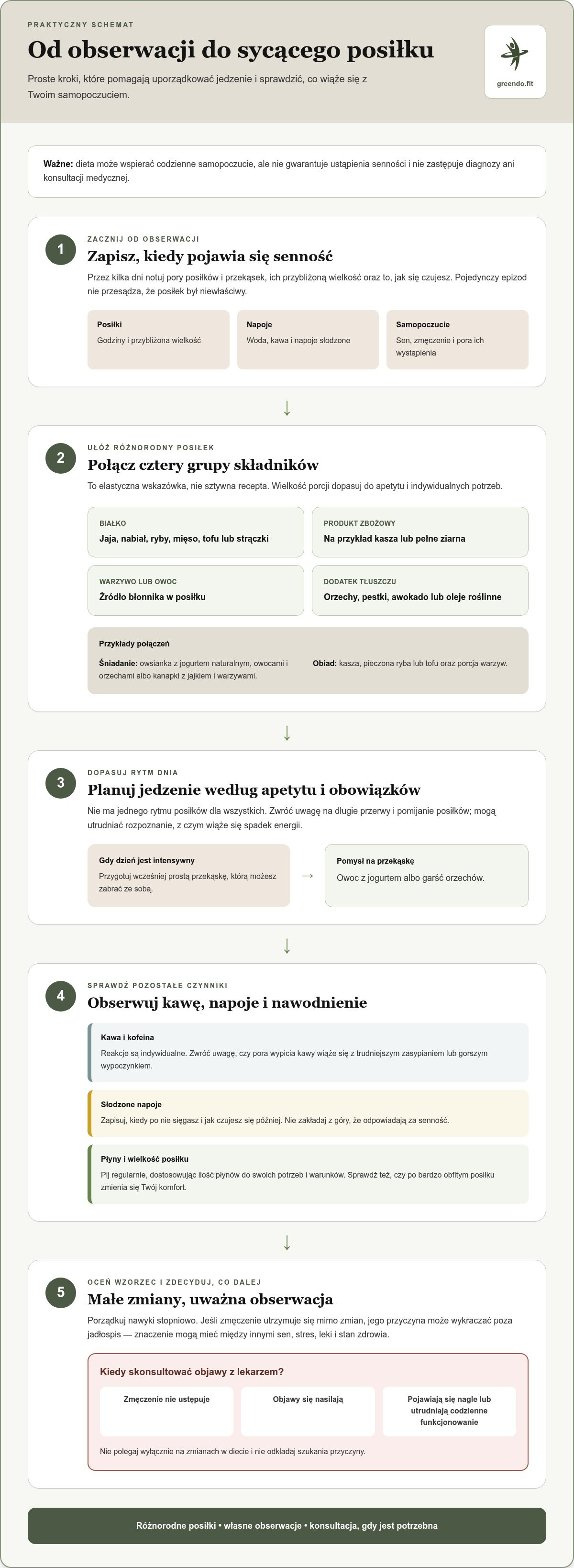
You do not have to change your entire menu at once. Choose one feasible adjustment, see how it fits into your day, and only then decide whether to introduce another. If you are wondering how to reduce daytime fatigue and drowsiness with diet, organize your habits in a few simple steps:
- Observe: write down when you eat and at what moments you feel an energy dip.
- Ensure regularity: plan meal times to fit your work, responsibilities, and appetite.
- Compose: combine a protein source with a grain product and a vegetable or fruit, and add a source of fat.
- Remember fluids: keep a drink on hand and drink regularly, adjusting the amount to your needs.
- Assess your well-being: after some time, check if the chosen change is convenient and if you notice a recurring connection with your well-being.
Example Meal Rhythm for a Workday
Treat this layout as an inspiration, not a ready-made diet. For breakfast, choose, for example, sandwiches with an egg and vegetables or oatmeal with yogurt and fruit. For lunch, groats, fish or tofu, and vegetables will work well. If you feel hungry between meals, a snack could be yogurt with fruit. If you are active in the morning, you can take a sandwich or fruit with you and eat it when it suits your appetite.
What and how much you eat depends on your daily routine, appetite, health, and preferences. If you want to organize your daily choices, you can use an individual diet plan for women, tailored to your nutritional and body goals.
How to Assess if a Change in Habits is Helpful?
For a few days, note down meal times, drinks consumed, sleep quality, and your well-being. A short note is enough, for example: "I felt drowsy after lunch" or "I did not have time for a break." You do not need to count every calorie or judge a single meal. Look for recurring trends and changes that can be sustained. Supplementation can complement your diet, but it does not replace a balanced diet or medical consultation.
When Does Fatigue Require a Consultation, Not Just Dietary Changes?
Changing your eating habits can support daily well-being, but it does not always explain the cause of fatigue. If symptoms persist, worsen, appear suddenly, or if drowsiness hinders your work and usual duties, discuss them with a doctor. Do not wait for a dietary change alone to bring improvement. A specialist will assess whether it is also worth looking at sleep quality, stress levels, medications, overall health, or possible deficiencies.
What Symptoms Are Worth Discussing with a Specialist?
Prepare brief information about how long you have been feeling tired, whether it is getting worse, and how it affects your daily functioning. Also, write down how you sleep, what your meals usually look like, and what medications you take. Such details can facilitate the conversation, but they are not for self-diagnosing the cause. It is not possible to confidently determine that a specific deficiency is the issue based on symptoms alone.
Do not start supplementing with iron or vitamins on your own with the intention of treating fatigue. The justification for tests and possible supplementation should be decided by a specialist, considering your situation. A dietary supplement does not replace a diagnosis or treatment.
How Does GREENDO Support a Conscious Approach to Nutrition?
The GREENDO VIP diet plan helps to tailor your way of eating to individual goals and organize daily choices. It is a support in diet planning, not a means of diagnosing or treating the causes of drowsiness. The basis remains varied meals, hydration, and a daily rhythm adapted to your needs.
Forever Young is a dietary supplement containing whey protein isolate, bovine collagen hydrolysate, vitamin C, biotin, and coenzyme Q10. It should not be treated as a way to cure fatigue. Supplementation can complement a diet, but it should not replace a consultation when symptoms persist.
Conscious self-care begins with small, sustainable steps. You can find more information about GREENDO's approach to daily nutrition on the GREENDO website. Remember that observing your habits can be helpful, but persistent or sudden symptoms are worth consulting with a doctor.
Choose One Habit and Start with It
If you are wondering how to reduce daytime fatigue and drowsiness with diet, start with the basics: eat regularly, compose meals from different food groups, and remember to drink fluids. Observe how you feel after meals, but do not draw conclusions based on a single day. Sleep, stress, activity, and health status can also be significant.
Introduce changes gradually. One better-planned meal or snack can be a good start. If fatigue persists, worsens, or appears suddenly, consult a doctor. Diet can support daily well-being, but it does not replace an assessment of the cause of the symptoms.
If you want to organize your nutritional choices, discover the GREENDO VIP Diet Plan, individually tailored to your nutritional and body goals. Forever Young is a dietary supplement combining whey protein isolate, bovine collagen hydrolysate, vitamin C, biotin, and coenzyme Q10. It does not replace a balanced diet or medical consultation.
Small, conscious steps matter. Start with what you can implement today and choose solutions that fit your life.
Frequently Asked Questions
What kind of breakfast can help reduce daytime drowsiness?
Choose a breakfast that combines several food groups and suits your appetite. An example could be oatmeal with yogurt, fruit, and nuts, or whole-grain bread with an egg and vegetables. Such a meal provides protein, grain products, and plant-based components. However, there is no breakfast that guarantees a lack of drowsiness. Pay attention to whether the chosen portion and its composition provide you with comfort until the next meal.
Can irregular meals cause fatigue?
Irregular eating can make it difficult to plan meals and recognize your body's needs, but it does not in itself determine the cause of fatigue. If you are wondering how to reduce daytime fatigue and drowsiness with diet, observe whether long breaks or skipping meals are recurrent before a drop in well-being. Adjust your eating rhythm to your day and appetite. You do not need to impose a single number of meals on yourself.
What to eat when drowsiness appears after lunch?
There is no single product that always eliminates drowsiness after lunch. Ensure your meal combines a source of protein, a grain product, and vegetables, and adjust its size to your appetite. Pay attention to whether you feel discomfort or greater drowsiness after a very large meal. Record such observations instead of immediately eliminating specific ingredients. If drowsiness persists regardless of meals, consider consulting a doctor.
Is coffee a good way to combat daytime drowsiness?
Coffee can temporarily increase alertness, but it does not replace sleep or explain the cause of drowsiness. The reaction to caffeine is individual. For some people, coffee, especially when consumed later in the day, can make it difficult to fall asleep or worsen sleep quality. Observe how the amount and timing of its consumption affect you. If you have doubts related to your health or medications, consult a doctor.
Can an iron or vitamin B12 deficiency be linked to fatigue?
Yes, an iron or vitamin B12 deficiency can be linked to fatigue, but other possible causes can lead to similar feelings. It is not possible to diagnose a deficiency based on symptoms alone. If you suspect this might be your issue, discuss it with a doctor who will assess whether tests are needed. Do not start supplementing with iron or vitamins on your own without medical advice and consultation.
When does daytime drowsiness require a consultation with a doctor?
Consult a doctor if drowsiness hinders daily functioning, fatigue does not subside, worsens, or appears suddenly. Before the conversation, note down when the symptoms started, how you sleep, what your diet is like, and what medications you are taking. This information can help in assessing the situation but is not for self-diagnosis. A doctor can consider various factors, including sleep, stress, health status, and possible deficiencies.
Frequently Asked Questions
What kind of breakfast can help reduce daytime drowsiness?
Choose a breakfast that combines several food groups and suits your appetite. An example could be oatmeal with yogurt, fruit, and nuts, or whole-grain bread with an egg and vegetables. Such a meal provides protein, grain products, and plant-based components. However, there is no breakfast that guarantees a lack of drowsiness. Pay attention to whether the chosen portion and its composition provide you with comfort until the next meal.
Can irregular meals cause fatigue?
Irregular eating can make it difficult to plan meals and recognize your body's needs, but it does not in itself determine the cause of fatigue. If you are wondering how to reduce daytime fatigue and drowsiness with diet, observe whether long breaks or skipping meals are recurrent before a drop in well-being. Adjust your eating rhythm to your day and appetite. You do not need to impose a single number of meals on yourself.
What to eat when drowsiness appears after lunch?
There is no single product that always eliminates drowsiness after lunch. Ensure your meal combines a source of protein, a grain product, and vegetables, and adjust its size to your appetite. Pay attention to whether you feel discomfort or greater drowsiness after a very large meal. Record such observations instead of immediately eliminating specific ingredients. If drowsiness persists regardless of meals, consider consulting a doctor.
Is coffee a good way to combat daytime drowsiness?
Coffee can temporarily increase alertness, but it does not replace sleep or explain the cause of drowsiness. The reaction to caffeine is individual. For some people, coffee, especially when consumed later in the day, can make it difficult to fall asleep or worsen sleep quality. Observe how the amount and timing of its consumption affect you. If you have doubts related to your health or medications, consult a doctor.
Can an iron or vitamin B12 deficiency be linked to fatigue?
Yes, an iron or vitamin B12 deficiency can be linked to fatigue, but other possible causes can lead to similar feelings. It is not possible to diagnose a deficiency based on symptoms alone. If you suspect this might be your issue, discuss it with a doctor who will assess whether tests are needed. Do not start supplementing with iron or vitamins on your own without medical advice and consultation.
When does daytime drowsiness require a consultation with a doctor?
Consult a doctor if drowsiness hinders daily functioning, fatigue does not subside, worsens, or appears suddenly. Before the conversation, note down when the symptoms started, how you sleep, what your diet is like, and what medications you are taking. This information can help in assessing the situation but is not for self-diagnosis. A doctor can consider various factors, including sleep, stress, health status, and possible deficiencies.