How to Strengthen Nails After Gel Polish? At-Home Methods and Care
October 4, 2026 · 15 min read
What should you do when, after removing gel polish, your nails become soft, brittle, and start to split? If you find yourself searching for "how to strengthen nails after gel polish at-home methods," start with gentle care and patient observation. Your daily habits can help protect the nail plate from further damage, but they will not immediately repair the already weakened part.
Weakened nails can be related to, among other things, mechanical damage during product removal. Refrain from peeling off the polish and excessive filing. On a daily basis, treat your hands gently and protect your nails from drying out.
In this article, you will learn a simple routine for when you take a break from gel polish, what to avoid, and how to return to styling without rushing. We also explain when it is worth consulting a specialist about changes to your nails. Improvement does not happen overnight, which is why gentle, regular actions are most important.
Key Takeaways
- You will learn why nails can become brittle or thin after styling and how to calmly assess their condition.
- You will discover a gentle routine: delicate filing in one direction, moisturizing cuticles, and protecting your hands.
- You will find out how to strengthen nails after gel polish. Treat at-home methods as care, not as an immediate repair for the nail plate.
- You will learn what to avoid during a break from gel polish, including peeling off the polish and aggressive buffing.
- You will recognize concerning symptoms, such as pain, swelling, or unusual discoloration, which are worth discussing with a specialist.
Table of Contents
- Why Are Nails Sometimes Brittle and Thin After Gel Polish?
- How Do Nails Recover After Gel Polish and What to Expect?
- At-Home Nail Care After Gel Polish: A Simple Step-by-Step Routine
- At-Home Remedies for Nails After Gel Polish: What Helps and What to Be Realistic About
- When to Stop At-Home Care and Consult a Specialist About Your Nails
Why Are Nails Sometimes Brittle and Thin After Gel Polish?
Thin, brittle nails after removing your polish can be concerning. First, examine them calmly without any polish on. The nail plate is made mainly of keratin, and its surface can look different after wearing and removing gel polish. You can read more about its structure in an article about the anatomy of the nail.
The condition of the nail plate can be influenced by how the nails are prepped, the frequency of new applications, and the method of product removal. Overly aggressive filing, prying, or peeling off the gel polish can damage the top layer of the nail, making it more prone to breaking and splitting. Simply observing the changes after a manicure does not allow for identifying one certain cause. It also does not automatically mean that the nails are permanently damaged.
How to Recognize a Weakened Nail Plate After Removing Gel Polish?
After removing the polish, check if your nails are:
- brittle and break easily;
- splitting at the free edge;
- soft or more flexible than usual;
- uneven, with visible ridges or a rough surface.
Examine them in natural light, without any polish that could obscure the surface. a single ridge or temporary tenderness after removal does not necessarily indicate a problem. Observe whether the changes worsen and if other concerning symptoms appear. In such a situation, do not try to diagnose the issue yourself, but consult a specialist.
Does Gel Polish Always Damage Nails?
Not every gel manicure leads to a weakened nail plate. The application and removal method matter, as does the frequency of treatments. Peeling off the product yourself can be particularly damaging because thin layers of the natural nail plate can come off with it. Aggressive filing can also weaken it. If you notice brittleness, do not immediately cover it with another manicure. First, take a closer look at your nails and how you care for them.
The condition of your nails is determined by more than just the polish itself. With this in mind, approach the question of how to strengthen your nails after gel polish. It is wise to start at-home methods with gentle actions that do not cause further damage to the nail plate.
How Do Nails Recover After Gel Polish and What to Expect?
After removing the polish, you can immediately take care of your hands' comfort, but this care will not instantly change the part of the nail plate that has already grown out. The nail grows towards the free edge as a new plate forms at its base. Visible improvement, therefore, consists mainly of the gradual replacement of the weakened section with a new one.
What Happens to the Nail Plate as It Regrows?
The new part of the nail forms at the base and moves forward over time. If the older part is uneven, brittle, or splitting, surface care will not reverse these changes. It can, however, help reduce dryness and the risk of further damage as the nail plate regrows. The rate of growth and the appearance of nails are individual, so do not set a rigid timeline for improvement or expect an oil or conditioner to repair the plate overnight.
Care can protect the nails, but the damaged part must gradually grow out. This is a realistic point of reference when you are wondering how to strengthen your nails after gel polish. Treat at-home care methods as support, not as a method for immediate restoration. The American Academy of Dermatology also advises a gentle approach to nail styling and care.
Does a Break from Gel Polish Help Nails?
A break allows you to limit further treatments and observe the natural nail plate without a layer of product. There is no single mandatory length of time that is right for everyone. Be guided by the condition of your nails and hold off on the next manicure if they are still breaking or splitting easily. A break itself does not repair existing damage, but it makes it easier to notice changes and avoid additional stress.
If your nails catch on clothing or objects, gently shorten them and give them a comfortable shape. This is a simple way to limit accidental breakage during daily activities. Opt for gentle care. If you also want to take care of your daily nutrition, learn about GREENDO's approach to conscious self-care.
At-Home Nail Care After Gel Polish: A Simple Step-by-Step Routine
After removing the polish, focus on simplicity and regularity. At-home care will not immediately change the structure of the nail plate, but it can help limit dryness and accidental damage. If you are wondering how to strengthen your nails after gel polish, start your at-home methods with a few gentle habits, not with intensive buffing or using many products at once.
How to Care for Nails and Cuticles Every Day?
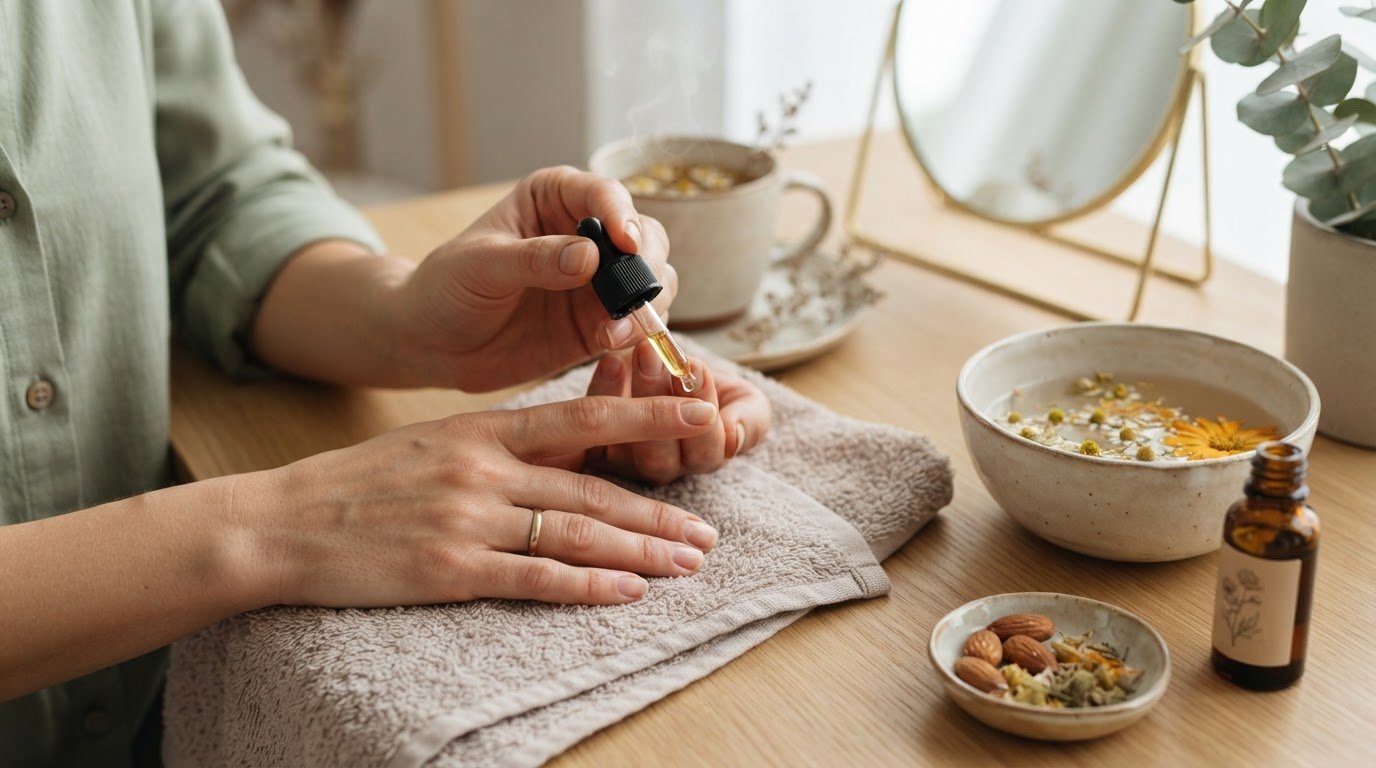
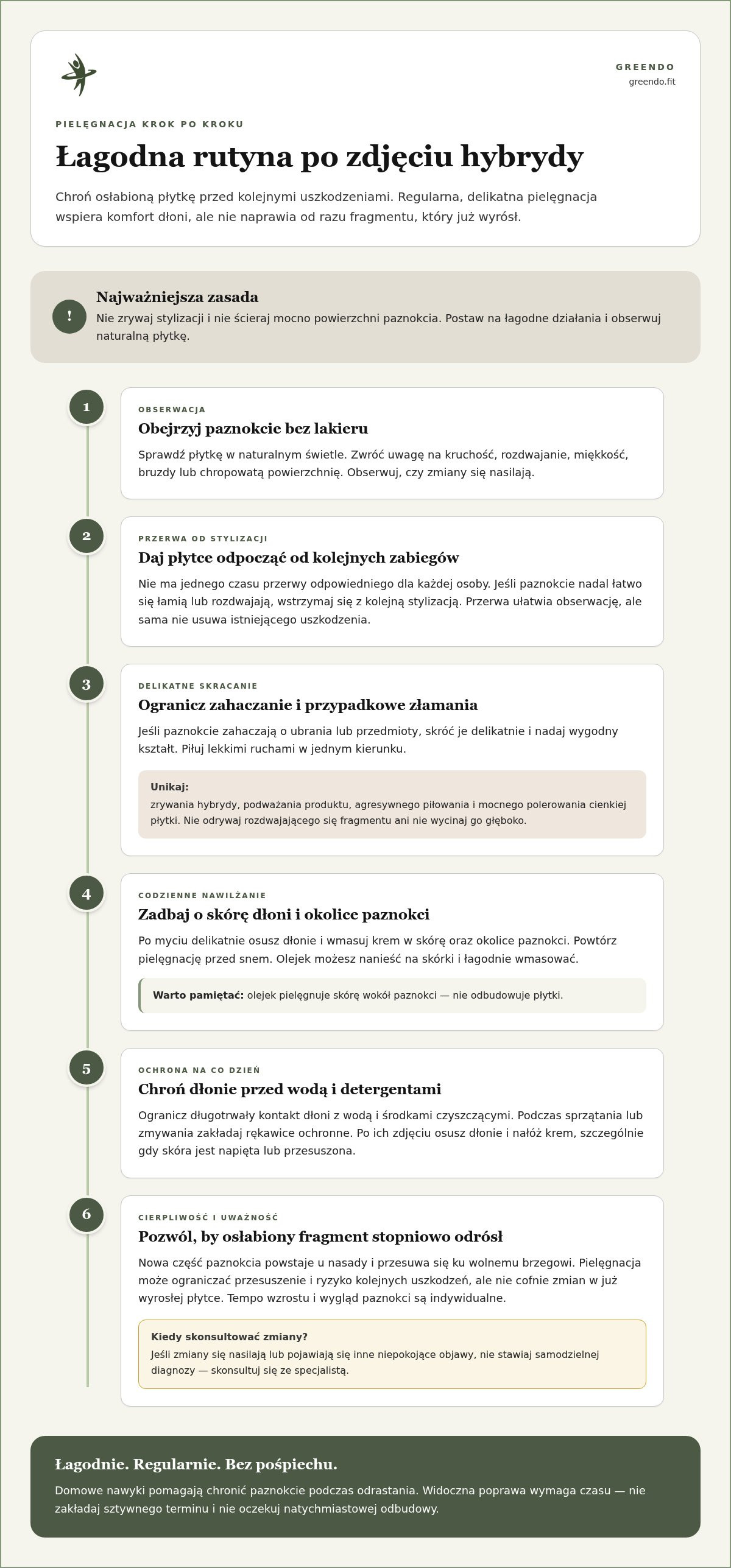
After washing your hands, gently dry them and massage cream into the skin and around the nails. Repeat this before bed. Apply oil to the cuticles and massage it in gently. Treat it as part of caring for the skin around the nails, not as a product that rebuilds the nail plate. When filing, use gentle strokes in one direction. If your nails are thin, skip heavy buffing, which can further wear down their surface.
Limit prolonged contact of your hands with water and detergents. Wear protective gloves when cleaning or washing dishes. After removing them, dry your hands and apply cream, especially if your skin feels tight or dry.
How to Protect Brittle Nails from Further Breaking?
Do not peel off a splitting fragment or cut it deeply. Gently shorten the nail with a file to reduce snagging on clothes and objects. If the plate is irritated or visibly damaged, postpone your next manicure. Observe your natural nails and avoid treatments that could further burden them.
A simple routine will be helpful:
- after washing your hands, dry them thoroughly, including around the nails;
- regularly use hand cream and cuticle oil;
- wear gloves during cleaning and other wet work;
- file your nails gently, in one direction, and shorten them when they snag easily;
- observe whether brittleness, splitting, or unevenness worsens.
These are small actions that are easy to incorporate into daily care. Their goal is to protect your hands and limit further damage, not to promise a quick restoration of the nail plate.
At-Home Remedies for Nails After Gel Polish: What Helps and What to Be Realistic About?
It is important to assess at-home methods realistically. A cream and oil will care for the cuticles and help reduce the feeling of dryness, but they will not repair the part of the nail plate that is already damaged. Choose gentle actions and incorporate them into your daily routine, rather than reaching for intensive treatments that promise quick restoration.
Avoid aggressive buffing, peeling or prying off gel polish, and irritating homemade concoctions. Such actions can further irritate the skin or damage the nail plate. If you experience pain, redness, swelling, nail separation, or unusual discoloration, do not mask the changes with a home remedy. Consult a specialist.
Can Oil and Cream Strengthen Nails?
Use cosmetic products primarily on the skin of your hands and cuticles. Cream helps to care for the comfort of dry skin, and you can gently massage oil around the nails. Regular care is more sensible than a one-time, intensive treatment. Remember, however, that a better appearance of the cuticles does not mean the damaged nail plate has been restored.
Do Diet and Supplementation Matter for Nails?
A varied diet supports the body as a whole. Protein is a component of the diet, and its sources should be included in daily, balanced meals. You can read more about how to approach this topic in the article Protein for Women: A Guide to Conscious Supplementation and Natural Beauty (2026). A broader context of collagen supplementation is discussed in Collagen for Women: A Complete Guide to Conscious Supplementation (2026). Treat these titles as starting points for learning about the subject, not as a promise of improving the condition of your nails.
Biotin is a nutrient, but taking it alone does not guarantee that your nails will become stronger. A supplement does not replace proper care or a consultation when changes are concerning. Forever Young contains, among other things, biotin, vitamin C, whey protein isolate, and hydrolyzed bovine collagen. Do not attribute a nail-repairing effect to it. You can find more information about the product on the GREENDO website.
When to Stop At-Home Care and Consult a Specialist About Your Nails
Gentle care can improve the comfort of your hands, but it is not always enough. Pay attention to changes that worsen, recur, or do not go away. Do not try to identify their cause solely based on the appearance of the nail or a photo. Similar symptoms can have different origins, so it is best to leave their assessment to a specialist.
What Nail Symptoms Require a Consultation?
Consult a dermatologist if you notice:
- pain or significant tenderness of the nail;
- redness or swelling of the skin around it;
- separation of the nail plate from the nail bed;
- unusual discoloration, especially if it changes or spreads.
It is important not only how the nail looks at a given moment, but also whether the symptoms are changing. If the issues worsen, return, or persist despite gentle care, schedule a consultation. Do not apply another layer of polish to hide a change, and do not use irritating mixtures or preparations intended for other problems on your own. Observation can help you notice a change, but it does not replace a medical evaluation.
How to Return to Manicures Without Rushing?
Return to your next manicure only when your nails and the surrounding skin look calm, and the plate is not overly tender. If you still see damage or concerning discoloration, postpone the manicure and consult about the change. Do not peel off the product, pry it, or aggressively file the natural plate. Gentleness is also important for subsequent polish removal.
If you are looking for tips on how to strengthen nails after gel polish, treat at-home methods as a support for your daily care, not as a substitute for a consultation. Cream, oil, and careful shortening of the nails can help reduce dryness and snagging, but they will not explain the cause of persistent changes. A gentle routine supports your hands but does not replace a medical assessment.
Forever Young combines whey protein isolate, hydrolyzed bovine collagen, vitamin C, biotin, and coenzyme Q10. Supplementation can complement your daily diet, but it should not be credited with healing properties or an impact on nail restoration. GREENDO also offers a personalized VIP Nutrition Plan. Discover Forever Young.
Choose Gentle Care and Give Your Nails Time
Brittle or splitting nails after gel polish require calm observation, not intensive treatments. Gentle filing, moisturizing cuticles, and protecting your hands can limit further damage, but the affected part of the nail plate must gradually grow out. Peeling off the polish and aggressive buffing can further harm your nails.
When you are wondering how to strengthen your nails after gel polish, treat at-home methods as part of caring for your hands, not as a promise of immediate restoration. A varied diet supports the body, but a supplement does not replace care or a consultation. Consult a dermatologist for pain, swelling, redness, nail separation, or unusual discoloration, especially if the changes worsen or persist.
Forever Young combines whey protein isolate, hydrolyzed bovine collagen, vitamin C, biotin, and coenzyme Q10. Supplementation can complement a daily diet, without promising an impact on nail restoration. GREENDO also offers a personalized VIP Nutrition Plan. Discover Forever Young.
Small, consistent steps matter. Give yourself time and choose care that supports the comfort of your hands.
Frequently Asked Questions About Nails After Gel Polish
Will nails recover on their own after gel polish?
The damaged part of the nail plate does not repair itself; it gradually moves toward the nail tip as a new plate grows. During this time, gentle care can help protect the nails from further dryness and damage, but it will not instantly change the existing plate. The growth rate is individual. If you notice pain, plate separation, or unusual discoloration, consult a dermatologist about the changes.
How can I quickly strengthen my nails after gel polish with at-home methods?
There is no at-home method that will instantly restore a damaged nail plate. Instead of intensive treatments, choose gentle, regular care: gently shorten your nails, file them in one direction, moisturize your cuticles, and protect your hands during cleaning. Avoid buffing a thin nail plate and peeling off the product. These habits reduce the risk of further damage, but improvement in appearance mainly depends on the regrowth of the healthy part of the nail.
Does castor oil strengthen nails after gel polish?
There is no basis to promise that castor oil will restore or strengthen a damaged nail plate. You can use it on your cuticles as part of your care routine if your skin tolerates it well, just like other cosmetic oils. Massage a small amount gently, without intense rubbing. Caring for the skin around the nail can improve its comfort, but it does not replace the growth of a new nail plate or a consultation for concerning changes.
Is it necessary to take a break from gel polish after nails have weakened?
A break can be helpful because it limits further treatments and allows you to observe the natural nail plate. There is no single mandatory length of time that is right for everyone. If your nails are brittle, painful, or visibly damaged, postpone your next manicure and focus on gentle care. Return to manicures without rushing, when the plate and the skin around it are not irritated or overly tender.
Does biotin help nails after gel polish?
Biotin is a nutrient, but supplementing with it does not guarantee an improvement in the condition of your nails after gel polish. Dietary supplements complement a daily diet and do not replace proper care or a specialist's advice. Before you start supplementation, consider your diet and individual health situation. If weakened nails are accompanied by pain, plate separation, or unusual color changes, consult a dermatologist instead of relying solely on a supplement.
Can you apply another gel manicure to weakened nails?
If the nail plate is visibly thin, damaged, painful, or irritated, it is better to postpone the next manicure. An additional treatment can make it difficult to observe the natural nail, and careless preparation or product removal can cause further damage. Do not peel off the gel polish or aggressively file the plate. When your nails look calm again and are not tender, you can return to manicures without rushing.
When should you consult a dermatologist about your nails after gel polish?
Consult a dermatologist if you experience pain, swelling, redness, separation of the nail plate, or unusual discoloration. Also, make an appointment if the changes worsen, recur, or do not go away. The appearance of the nail alone, even in a photo, does not allow for a definite determination of the cause. Until the consultation, do not mask the changes with another manicure and avoid irritating mixtures. Gentle care does not replace a medical evaluation.
Discover Forever Young by GREENDO and see how to incorporate the flagship product into your daily routine.
Frequently Asked Questions
Will nails recover on their own after gel polish?
The damaged part of the nail plate does not repair itself; it gradually moves toward the nail tip as a new plate grows. During this time, gentle care can help protect the nails from further dryness and damage, but it will not instantly change the existing plate. The growth rate is individual. If you notice pain, plate separation, or unusual discoloration, consult a dermatologist about the changes.
How can I quickly strengthen my nails after gel polish with at-home methods?
There is no at-home method that will instantly restore a damaged nail plate. Instead of intensive treatments, choose gentle, regular care: gently shorten your nails, file them in one direction, moisturize your cuticles, and protect your hands during cleaning. Avoid buffing a thin nail plate and peeling off the product. These habits reduce the risk of further damage, but improvement in appearance mainly depends on the regrowth of the healthy part of the nail.
Does castor oil strengthen nails after gel polish?
There is no basis to promise that castor oil will restore or strengthen a damaged nail plate. You can use it on your cuticles as part of your care routine if your skin tolerates it well, just like other cosmetic oils. Massage a small amount gently, without intense rubbing. Caring for the skin around the nail can improve its comfort, but it does not replace the growth of a new nail plate or a consultation for concerning changes.
Is it necessary to take a break from gel polish after nails have weakened?
A break can be helpful because it limits further treatments and allows you to observe the natural nail plate. There is no single mandatory length of time that is right for everyone. If your nails are brittle, painful, or visibly damaged, postpone your next manicure and focus on gentle care. Return to manicures without rushing, when the plate and the skin around it are not irritated or overly tender.
Does biotin help nails after gel polish?
Biotin is a nutrient, but supplementing with it does not guarantee an improvement in the condition of your nails after gel polish. Dietary supplements complement a daily diet and do not replace proper care or a specialist's advice. Before you start supplementation, consider your diet and individual health situation. If weakened nails are accompanied by pain, plate separation, or unusual color changes, consult a dermatologist instead of relying solely on a supplement.
Can you apply another gel manicure to weakened nails?
If the nail plate is visibly thin, damaged, painful, or irritated, it is better to postpone the next manicure. An additional treatment can make it difficult to observe the natural nail, and careless preparation or product removal can cause further damage. Do not peel off the gel polish or aggressively file the plate. When your nails look calm again and are not tender, you can return to manicures without rushing.
When should you consult a dermatologist about your nails after gel polish?
Consult a dermatologist if you experience pain, swelling, redness, separation of the nail plate, or unusual discoloration. Also, make an appointment if the changes worsen, recur, or do not go away. The appearance of the nail alone, even in a photo, does not allow for a definite determination of the cause. Until the consultation, do not mask the changes with another manicure and avoid irritating mixtures. Gentle care does not replace a medical evaluation. Discover Forever Young by GREENDO and see how to incorporate the flagship product into your daily routine.