
A Protein Diet for Women’s Weight Loss: How to Plan It Sensibly?
October 13, 2026 · 16 min read
Does a diet with more protein have to mean a rigid menu and giving up your favorite foods? Not necessarily. A protein diet for women aiming for weight loss can be based on ordinary, satisfying meals if you correctly combine protein sources with vegetables, grain products, and healthy fats.
You might wonder how much protein to include in your day and how to distribute it among your meals. The choice is not always obvious: meat, dairy, fish, eggs, or plant-based products have different places in a diet, and restrictive rules are hard to maintain long-term. It is not just the amount of protein that matters, but also a way of eating that fits your daily rhythm, preferences, and health.
In this article, you will learn what role protein plays during weight loss and how to compose wholesome, satisfying meals without unnecessary restrictions. We will look at practical sources of protein, its distribution throughout the day, and how to maintain balance in your diet. Calmly, step by step, with a focus on habits you can develop daily.
Key Takeaways
- A protein diet for women’s weight loss is a way of composing meals, not a necessity to eliminate entire food groups.
- Determine your protein intake based on your diet, activity, and individual needs.
- Choose protein sources according to your preferences and tolerance, ensuring meal diversity.
- Plan main meals so that a protein source is accompanied by vegetables or fruits.
- Treat supplementation as an optional addition, and an individual VIP Diet Plan as an opportunity to tailor your menu to your needs.
Table of Contents
- A protein diet for women’s weight loss: what it is and what it is not?
- How to determine the amount of protein and distribute it throughout the day?
- What protein sources to choose for weight loss?
- How to plan a day of eating for weight loss to make the diet satisfying?
- How to combine a protein diet, weight loss, and sensible supplementation?
A protein diet for women’s weight loss: what it is and what it is not?
In short: a protein diet is a way of composing meals in which you include appropriate sources of protein, maintaining the diversity and balance of your menu. It does not mean a ready-made, rigid menu or giving up entire food groups.
A higher protein intake alone does not cause weight loss. The key is to maintain a caloric deficit, which means providing the body with less energy than it uses. Protein can be one of the elements of a satisfying menu, but it will not replace a comprehensive nutrition plan or regular habits. Therefore, a protein diet for women’s weight loss should be tailored to you, not based on a universal template.
A practical change does not have to mean a radical menu overhaul. For example, you can enrich your breakfast with natural yogurt or eggs, and add fish, tofu, or legumes to your dinner. It is important that while increasing protein intake, you do not automatically exclude vegetables, fruits, grain products, and fat sources. This approach differs from extreme diets based on a few products, which can be difficult to maintain and may not meet your needs.
How can protein support satiety and muscle preservation?
Protein provides the body with the components needed to build and renew tissues, including muscles. During weight loss, an adequate amount of it can support the maintenance of muscle mass, especially when accompanied by physical activity. The entire way of eating matters, not just one product or a single meal.
A meal containing protein can help you feel full, which makes it easier to plan your food for the day. However, this is not a guarantee of a smaller appetite or a way to skip meals. Observe your own reaction: for one person, a breakfast with cottage cheese will be satisfying, for another, it will be oatmeal with yogurt and nuts.
Does a protein diet mean giving up carbohydrates?
No. Your menu can still include vegetables, fruits, whole-grain bread, groats, rice, and fats, for example, from olive oil, seeds, or nuts. These products complement meals and help maintain their diversity. A diet with a higher protein content is not the same as a restrictive model that eliminates carbohydrates.
A general overview of this eating method is also presented in the high-protein diet, including different approaches and issues worth considering. In practice, choose products that you like and tolerate well, and adjust the proportions to your activity, health, and overall menu. If you have a chronic disease, especially concerning the kidneys, discuss any dietary changes with a doctor or dietitian.
How to determine the amount of protein and distribute it throughout the day?
Do not start by looking for a single number that is supposed to fit every woman. First, check how much and what sources of protein already appear in your menu. Then, consider your activity, goal, and health status. Only then decide if it is worth changing anything. This order helps to avoid both accidentally increasing portions and a rigid plan that is difficult to fit into daily life.
How to determine your needs without guessing?
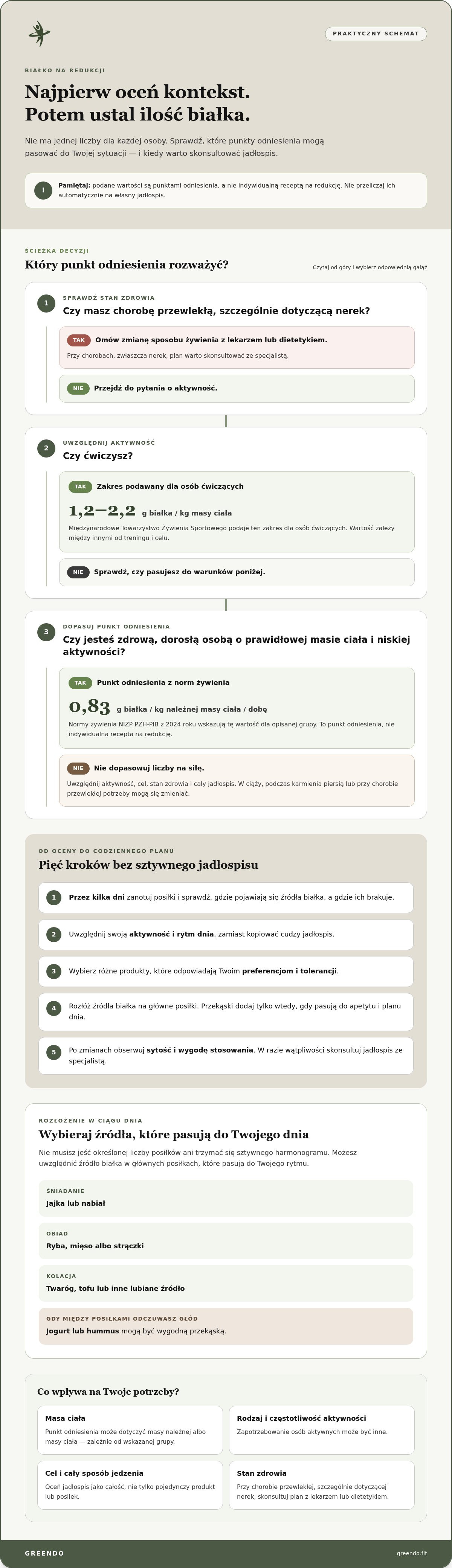
The 2024 nutritional norms from NIZP PZH-PIB indicate a recommended intake of 0.83 g of protein per kilogram of healthy body weight per day for a healthy adult with a normal body weight and low activity. This is a reference point, not an individual prescription for weight loss. For active people, the requirement may be different. The International Society of Sports Nutrition provides a range of 1.2-2.2 g per kilogram of body weight for exercising individuals, depending on, among other things, the training and goal.
Do not automatically apply these values to your own menu. Your body weight, type and frequency of activity, goal, and overall eating style matter, as does your health status. During pregnancy, breastfeeding, or in case of a chronic disease, the needs may change. For diseases, especially of the kidneys, consult your plan with a doctor or dietitian.
How to distribute protein among meals?
You do not have to eat a specific number of meals or stick to a rigid schedule. However, it is worth planning a source of protein in the main meals that fit your day. For example: breakfast can include eggs or dairy, lunch can have fish, meat, or legumes, and dinner can have cottage cheese, tofu, or another source that you like. If you feel hungry between meals, a snack with yogurt or hummus can be a convenient solution.
A simple way to plan:
- For a few days, note down your meals and check where protein sources appear and where they are missing.
- Consider your activity and daily rhythm, instead of copying someone else's menu.
- Choose different products that suit your preferences and are well-tolerated.
- Distribute them among your main meals, and add snacks only when they fit your appetite and schedule.
- After making changes, observe your satiety and the convenience of the diet. If in doubt, consult a specialist.
If you want to take a conscious look at how protein fits into women's nutrition and supplementation, read the material "Protein for Women". An VIP Diet Plan can also be helpful for individual menu adjustments. A supplement does not replace meals, and its use should be considered only after evaluating your own diet.
What protein sources to choose for weight loss?
The best source of protein is one that fits your menu, tastes good to you, and is well-tolerated. You do not have to base your meals on a single product. Choose different options, and alongside them add vegetables, fruits, and whole-grain products. They provide fiber and complement the meal, making it easier to ensure diversity.
A protein diet for women’s weight loss can include both animal and plant-based products. When choosing, availability, convenience of preparation, and your preferences also matter. If you do not eat meat or limit dairy, you can still compose meals with eggs, fish, legumes, tofu, or other products that meet your needs.
Animal and plant-based protein: how to adjust your choice?
Meat and fish are easy to include in dinner, and eggs work well for breakfast or supper. Dairy products, such as natural yogurt, kefir, or cottage cheese, can be a component of a meal or a snack. Among plant-based sources, you will find lentils, beans, chickpeas, and tofu. With a plant-based diet, ensure a variety of products and your entire menu.
- Meat and fish: add to dinner with vegetables and groats or whole-grain bread.
- Eggs: use in an omelet, spread, or as an addition to a salad.
- Dairy: combine with fruits, oatmeal, or vegetables, depending on the type of meal.
- Legumes and tofu: add to a soup, salad, curry, or sandwich spread.
This practical list suggests how to use individual groups without assigning them a single mandatory role. If a product does not agree with you or you simply do not like it, choose another one. Variety does not require complicated recipes. Often, it is enough to swap an ingredient in a familiar dish, for example, meat in a salad for beans or tofu.
When to consider whey protein isolate?
An isolate can be a convenient way to supplement your menu, for example, when it is difficult for you to prepare a meal after a workout or during a busy day. However, it is not essential for weight loss and does not replace a full meal that can also provide vegetables, fiber, and other ingredients. You can read more about its characteristics in the article "Whey Protein Isolate".
Forever Young contains whey protein isolate and hydrolyzed beef collagen, as well as vitamin C, biotin, and coenzyme Q10. It is an optional supplement, not a substitute for a varied diet. If you want to know the composition of Forever Young, consider it in the context of your entire menu and your own needs.
How to plan a day of eating for weight loss to make the diet satisfying?
A well-planned day does not require complicated recipes. Make sure that your main meals contain a source of protein, vegetables or fruits, and additions chosen according to your appetite. Such a flexible arrangement is easier to fit into daily life than a ready-made menu. It is important that the plan helps you eat regularly and does not require constant preparation of separate dishes.
How to build a satisfying plate?
Combine a source of protein with vegetables or fruits, a grain-based addition or potatoes, and a fat element, such as olive oil, seeds, or nuts. Vegetables, fruits, and whole-grain products bring fiber to the menu. You can exchange ingredients depending on your taste and availability. For example, for breakfast, have sandwiches with cottage cheese and radish, and for dinner, prepare a lentil stew with groats. These are inspirations, not an individual plan or a universal recipe. Include a snack, for example, a fruit or vegetables with a spread, when it suits your hunger and daily rhythm.
Before shopping, check your supplies and choose ingredients from which you can easily assemble several different dishes. Preparing some products in advance can make cooking easier on busy days.
- Plan a few ideas for main meals, including different sources of protein.
- Choose vegetables, fruits, and whole-grain additions that you like.
- Wash vegetables, cook groats, or prepare a spread to have ready-made ingredients on hand.
- Leave room for changing ingredients when plans change.
How to evaluate progress without jumping to conclusions?
Do not evaluate your plan based on a single measurement. Body weight can fluctuate in the short term, so also pay attention to your well-being and the regularity of your habits. Write down your observations to see the bigger picture over time. If your goal is to lower cholesterol, a protein diet alone does not guarantee improved results. Discuss them with your doctor, who will also consider other health factors.
Introduce changes at your own pace. Learn about GREENDO's approach to conscious nutrition and choose a habit that you can develop every day.
How to combine a protein diet, weight loss, and sensible supplementation?
Before you decide on a supplement, think about what you need in your daily nutrition. Take a look at your meals, the timing of your activity, and situations where it is difficult for you to ensure a convenient addition to your menu. This will allow you to assess whether an additional product is really useful, or if small changes in meal planning are enough.
Is a protein supplement necessary during weight loss?
No. If your menu meets your body's needs, you do not need to reach for a supplement. It can be practical when traveling or on a day when it is difficult to prepare a meal, but convenience does not replace diversity or independently set the direction for weight loss. Treat it as one of the possible options, not a mandatory point in your plan.
If you need more structure in your daily nutrition, choose solutions that take into account your preferences and daily rhythm. An individual approach helps to translate general principles into specific decisions, for example, planning meals for training days and days spent mostly away from home. It is also worth leaving yourself room for adjustments when your appetite or schedule changes. Learn about GREENDO's approach to conscious nutrition.
How to incorporate supplementation into your daily ritual?
If you choose a supplement, adjust its use to your routine and read the information on the label. Do not automatically add it to every day or treat it as a meal replacement. In case of allergies, special health needs, or doubts about the composition, discuss your choice with a doctor or dietitian.
Forever Young can be considered as an optional element of daily nutrition. The product itself does not cause weight loss and does not guarantee specific results. Its place in your plan is determined by your needs, eating habits, and preferences. If you want to take a closer look at the product, check the information about Forever Young and assess whether it fits into your daily routine.
Choose one habit and start with it
You do not have to change your entire way of eating at once. To begin, choose one decision that is easy to repeat: planning a protein component for dinner, preparing groceries with a few meals in mind, or writing down what you eat during the day. Give yourself space to check what works for your rhythm and how it affects your well-being.
A sensible protein diet for women’s weight loss is not about striving for the perfect menu. Its strength lies in its adaptation to your needs and habits that you can maintain without feeling constant pressure. If you want to see how GREENDO approaches conscious nutrition and supplementation, learn about GREENDO's approach to conscious nutrition and supplementation.
Small, thoughtful steps matter. Start with the one that seems most natural to you today, and build other good choices upon it.
Frequently asked questions about a protein diet for weight loss
Does a protein diet help with weight loss?
It can make it easier to stick to a nutrition plan if it helps you compose meals that you feel good about and are easy to prepare. Check if the chosen dishes also fit into your day at work, when traveling, and after a workout. If the plan requires constant exceptions or separate cooking, simplify it. Convenience and the ability to follow it regularly are important evaluation criteria.
How much protein should a woman eat per day for weight loss?
An individual goal should be set based on your entire way of eating, not the amount stated on the supplement packaging. A dietitian can assess your typical meals, activity, and health needs, and then help translate the recommendations into specific portions. Pay attention to whether a source of protein appears in the dishes you actually eat, instead of assuming that a supplement alone will fill any gaps.
Is a high-protein diet suitable for every woman?
Not every woman should independently increase her protein intake. Medications, health-related recommendations, and individual food tolerances can influence the choice of a menu. If you are undergoing treatment or have doubts about changing your diet, discuss it with a specialist before you start implementing new rules. In other cases, also evaluate the plan in terms of diversity and convenience.
Can you follow a protein diet without meat?
Yes, a meat-free menu can include protein. When planning, pay attention to the variety of meals throughout the week, instead of relying on one or two favorite dishes. It can be helpful to prepare several variations of breakfasts and dinners that are easy to swap. If you are also eliminating other food groups, make sure to get a comprehensive assessment of your diet to avoid accidentally restricting it.
Is a protein supplement necessary to lose weight?
No. Before you reach for one, check if you like the taste, composition, and preparation method, and whether the product suits your needs. Pay attention to allergens and the manufacturer's usage recommendations. If you do not like shakes or find it easier to plan a regular meal, you do not have to change your habits just because a supplement is popular.
Can a protein diet improve cholesterol levels?
Do not treat increasing protein intake alone as a way to change your results. When planning your menu, also pay attention to the type of fats and choice of products, and discuss your test results with your doctor. If your doctor has recommended a lipid panel check, stick to the scheduled test date and do not judge the effect by how you feel. This makes it easier to make decisions based on a more complete picture of your health.
Can you eat carbohydrates on a protein diet?
Yes. You can adjust their type and portions to your preferences, daily schedule, and how you feel during activity. Pay attention to whether a meal before or after a workout is comfortable for you, and adjust its composition without imposing rigid hours on yourself. You do not have to choose special products labeled as high-protein to create a varied menu.
Frequently Asked Questions
Does a protein diet help with weight loss?
It can make it easier to stick to a nutrition plan if it helps you compose meals that you feel good about and are easy to prepare. Check if the chosen dishes also fit into your day at work, when traveling, and after a workout. If the plan requires constant exceptions or separate cooking, simplify it. Convenience and the ability to follow it regularly are important evaluation criteria.
How much protein should a woman eat per day for weight loss?
An individual goal should be set based on your entire way of eating, not the amount stated on the supplement packaging. A dietitian can assess your typical meals, activity, and health needs, and then help translate the recommendations into specific portions. Pay attention to whether a source of protein appears in the dishes you actually eat, instead of assuming that a supplement alone will fill any gaps.
Is a high-protein diet suitable for every woman?
Not every woman should independently increase her protein intake. Medications, health-related recommendations, and individual food tolerances can influence the choice of a menu. If you are undergoing treatment or have doubts about changing your diet, discuss it with a specialist before you start implementing new rules. In other cases, also evaluate the plan in terms of diversity and convenience.
Can you follow a protein diet without meat?
Yes, a meat-free menu can include protein. When planning, pay attention to the variety of meals throughout the week, instead of relying on one or two favorite dishes. It can be helpful to prepare several variations of breakfasts and dinners that are easy to swap. If you are also eliminating other food groups, make sure to get a comprehensive assessment of your diet to avoid accidentally restricting it.
Is a protein supplement necessary to lose weight?
No. Before you reach for one, check if you like the taste, composition, and preparation method, and whether the product suits your needs. Pay attention to allergens and the manufacturer's usage recommendations. If you do not like shakes or find it easier to plan a regular meal, you do not have to change your habits just because a supplement is popular.
Can a protein diet improve cholesterol levels?
Do not treat increasing protein intake alone as a way to change your results. When planning your menu, also pay attention to the type of fats and choice of products, and discuss your test results with your doctor. If your doctor has recommended a lipid panel check, stick to the scheduled test date and do not judge the effect by how you feel. This makes it easier to make decisions based on a more complete picture of your health.
Can you eat carbohydrates on a protein diet?
Yes. You can adjust their type and portions to your preferences, daily schedule, and how you feel during activity. Pay attention to whether a meal before or after a workout is comfortable for you, and adjust its composition without imposing rigid hours on yourself. You do not have to choose special products labeled as high-protein to create a varied menu.