
Sugar-Free Collagen Powder: How to Read the Label and Choose Wisely
October 12, 2026 · 16 min read
Is the phrase "sugar-free" enough to know what is truly inside the package? When looking for a product like sugar-free collagen powder, it is easy to focus on the slogan on the front of the label and overlook the nutrition facts, sweeteners, or other ingredients. Yet this is the very information that will help you assess whether the formula fits your diet and daily habits.
Comparing several ingredient lists can be confusing. Naturally occurring sugars, added sugars, and sweeteners are different things, though they are easily mistaken for one another. Likewise, a simple formula does not automatically mean it will be the best choice for everyone.
In this guide, you will learn how to read the ingredient list and nutrition facts, distinguish sugars from sweeteners, and compare the type of collagen and additives like vitamin C or biotin. We will also look at formulas that combine collagen with other ingredients, including our flagship product, Forever Young. We will not assign it a sugar content claim. This will allow you to make a conscious choice, considering your entire diet, not just the slogan on the package.
Key Takeaways
- When evaluating sugar-free collagen powder, compare the claim on the packaging with the ingredient list and nutrition facts.
- Check if the product contains sweeteners and pay attention to the type and source of collagen.
- Compare labels for similar serving sizes to more easily contrast collagen content and additional ingredients.
- Choose a formula that matches your needs, taste preferences, and daily eating habits.
- Forever Young combines whey protein isolate and bovine collagen hydrolysate with vitamin C, biotin, and coenzyme Q10. Evaluate its sugar claims based on the label.
Table of Contents
- Sugar-Free Collagen Powder: What Does This Claim Mean?
- How Does the Composition of Collagen Powder Influence Your Choice?
- How to Compare Sugar-Free Collagen with Other Powdered Products?
- How to Choose the Right Sugar-Free Collagen Powder for Your Daily Routine?
- Forever Young by GREENDO vs. Sugar-Free Collagen Powder: How to Assess the Difference?
Sugar-Free Collagen Powder: What Does This Claim Mean?
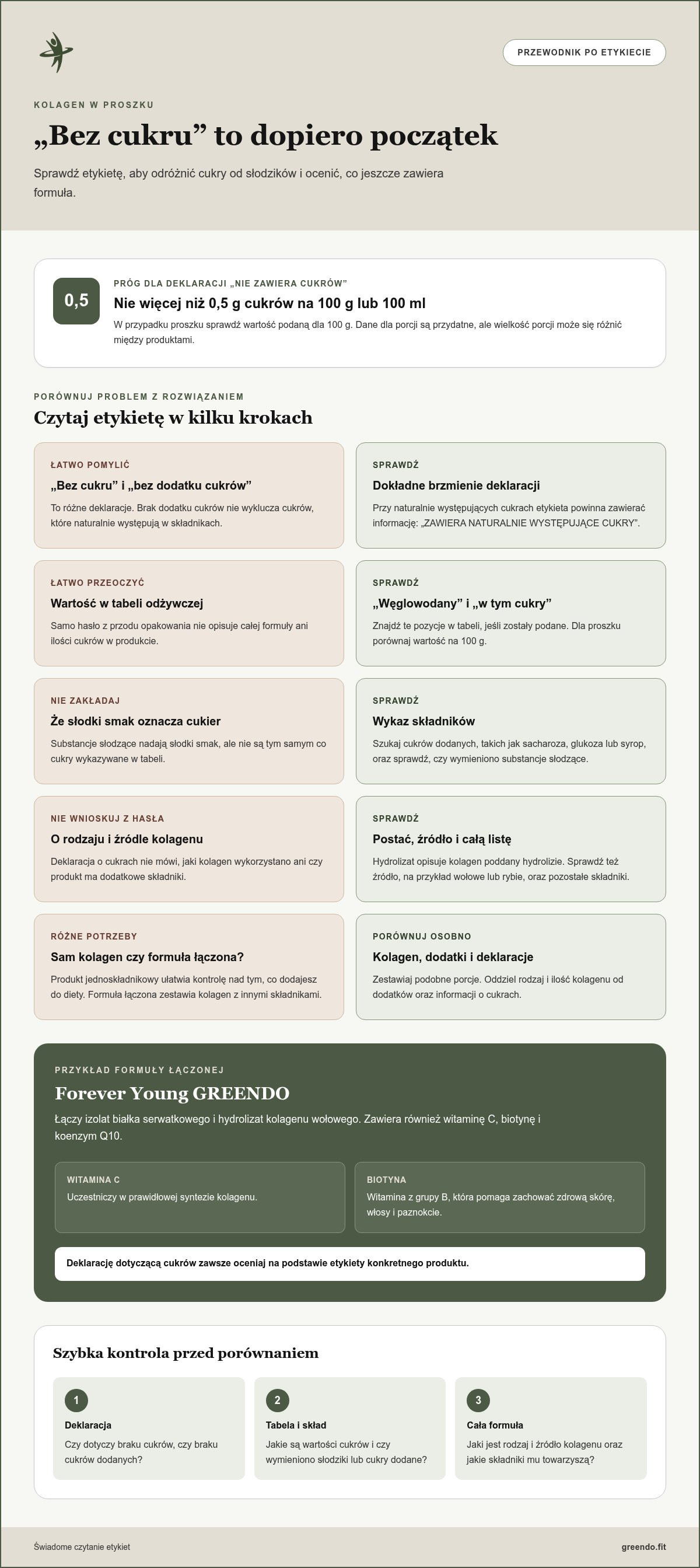
The words "sugar-free" have a specific meaning, not just a suggestion that the product is less sweet. According to EU regulations, a "no sugars" claim can be used when the product contains no more than 0.5 g of sugars per 100 g or 100 ml. For a powder, check the value given for 100 g. The per-serving data is also useful, but the serving size can differ between products.
A "no added sugars" claim has a different meaning. It indicates that no simple sugars, disaccharides, or ingredients used for their sweetening properties, such as honey, have been added to the product. However, the product may contain naturally occurring sugars. In this case, the label should state: "CONTAINS NATURALLY OCCURRING SUGARS." These claims are not interchangeable.
A "sugar-free" claim does not describe the entire formula. It does not tell you what type of collagen was used, whether sweeteners were added, or what other ingredients the product contains. If you want to understand collagen itself and its role in the body, a review of collagen on Wikipedia can be helpful. When evaluating a product, separate this information from claims about sugar.
Where to Find Information About Sugars on the Packaging?
Find the list of ingredients and the nutrition facts table, usually located on the back or side of the package. In the table, check the "carbohydrates" entry, and below it, "of which sugars," if provided. Then, scan the ingredient list for sources of added sugars, such as sucrose, glucose, or syrup. When in doubt, always refer to the current label of the specific product.
Sugar, Sweeteners, and Taste: What Is the Difference?
Added sugar is an ingredient used to sweeten a product. Sweeteners also impart a sweet taste but are not the same as the sugars shown in the nutrition facts table. However, do not assume that every sugar-free product contains a sweetener. It may have neither sugar nor a sweetening substance. Taste alone is not enough to judge sugar content.
Treat the claim on the front of the package as a starting point, not a complete assessment of the product. Check three things:
- what values are given for carbohydrates and sugars;
- whether added sugars or sweeteners are listed in the ingredients;
- whether the claim is "no sugars" or "no added sugars."
This comparison helps avoid a common mistake. A product can have a sweet taste due to a sweetener, and the absence of information about sweeteners does not automatically mean sugar has been added. If you want to limit a specific ingredient, check its name on the label. Do not make assumptions about the formula based on taste or an advertising slogan.
How Does the Composition of Collagen Powder Influence Your Choice?
The label tells you more than the slogan on the front. Check the form of the collagen, its source, and the accompanying ingredients. This will help you determine whether you are dealing with a product containing only collagen or a formula combining several ingredients. Neither option is automatically better. What matters is how it fits your diet and needs.
Hydrolyzed Collagen and Other Ingredients in the Formula
Collagen hydrolysate is collagen that has undergone hydrolysis, a process that breaks it down into smaller protein fragments called peptides. The term "hydrolyzed" describes how the raw material was processed. By itself, it does not inform you how much collagen is in a serving or what results to expect. If such data is provided on the label, evaluate it separately.
Also, pay attention to the source of the collagen. The packaging may indicate, for example, a bovine or marine source. This information is important if you are considering dietary preferences, avoiding certain raw materials, or comparing products with a similar purpose. Check the full name of the ingredient, not just a highlighted marketing term.
A single-ingredient product can make it easier to control what you add to your diet. A multi-ingredient formula combines collagen with other substances and may suit people who prefer several ingredients in one product. In both cases, read the list from beginning to end and note the order of ingredients. Compare the type of collagen, additives, and nutritional claims separately.
Vitamin C, Biotin, and Protein in a Combined Formula
Vitamin C contributes to the normal synthesis of collagen, which is the process of its creation by the body. Its presence can be important when evaluating the entire formula, but it is not a promise of specific supplementation effects. Biotin, a B-group vitamin, helps maintain healthy skin, hair, and nails. Check if these ingredients are actually in the composition.
Whey protein isolate and collagen hydrolysate are different protein ingredients. If you see them together, do not treat them as two names for the same substance. Consider whether you are looking exclusively for collagen or also for protein in your daily diet. An example of combining whey protein isolate with bovine collagen hydrolysate is GREENDO's flagship product, Forever Young. The formula also contains vitamin C, biotin, and coenzyme Q10. Evaluate its sugar claims based on the label.
When comparing sugar-free collagen powder with a combined formula, first determine what you are looking for: a simple composition or several ingredients in one product. You can explore the Forever Young formula and assess it in the context of your own diet and preferences.
How to Compare Sugar-Free Collagen with Other Powdered Products?
Compare labels using the same criteria, rather than being guided by the order of products on a shelf or an attractive description. Pay attention to the sugar claim, the presence of sweeteners, the type of collagen, and other ingredients. Manufacturers may present information differently, so also note any lack of data. Do not assume that an unlisted ingredient is definitely not present.
- Sugar claim: note whether the product claims to have "no sugars" or "no added sugars," and check the corresponding nutritional information.
- Sweeteners: write down the names of any sweetening substances from the ingredient list, if mentioned.
- Type of collagen: record its form, for example, hydrolysate, and the indicated source of the raw material.
- Additional ingredients: note whether the formula contains only collagen or also other ingredients, such as vitamins or protein.
Compare servings of a similar size. If one manufacturer provides values for a scoop and another for a serving of a different weight, first check the serving grammage. If the label states the amount of collagen per serving, compare it with the same information on the other package. If data is only provided per 100 g, do not directly compare it with the value for a single serving. Do not fill in missing information with guesswork.
Simple Formula or One with Additional Ingredients?
The choice depends on what is important to you. A simpler recipe can make it easier to check the composition, while a multi-ingredient formula may appeal to someone who prefers to combine several ingredients in a single supplement. A long list does not automatically mean a better formula, and a short one does not determine its effectiveness. Additives are no substitute for a balanced diet.
Set your own priority: simplicity, taste, a multi-ingredient formula, or a specific collagen source. Then, evaluate the label based on these criteria, not the number of ingredients.
How to Assess Sweeteners and Additives?
Read the names in the ingredient list instead of making assumptions about the formula based on a sweet taste. Consider which substances you accept and how the product fits into your dietary preferences. Tolerance is individual, so do not assume that every sweetener will be suitable for everyone. If you avoid a specific ingredient, check its name on the label.
With this kind of comparison, "sugar-free collagen powder" ceases to be just a slogan and becomes a product evaluated by specific criteria. You can apply these to the Forever Young formula and weigh its composition against your own priorities.
How to Choose the Right Sugar-Free Collagen Powder for Your Daily Routine?
Start with your own priorities, not the promises on the packaging. Think about what you expect from supplementation, which ingredients fit your way of eating, and what form will be easiest for you to use regularly. A dietary supplement is meant to complement your daily diet, not replace its foundations, such as varied meals and an adequate supply of nutrients. To organize your thoughts on supplementation, you might also find the "Collagen for Women" guide helpful.
Checklist Before Choosing a Product
Go through these five points before making a purchase. They will help you organize your criteria and compare the product with your own needs, rather than relying solely on the slogan on the front of the package.
- Define your goal. Write down why you are considering supplementation and which criteria are most important to you. This will help distinguish real needs from additional marketing promises.
- Read the label. Check the name and source of the collagen, the full list of ingredients, and the nutrition facts table. Pay attention to how the manufacturer describes a serving.
- Assess the sugars. Compare the claim on the packaging with the information about sugars and ingredient names. If you avoid specific substances, check if they are listed in the composition.
- Consider your tolerance. Take into account your dietary preferences and reactions to specific ingredients. The taste of the product alone is not enough to evaluate the formula.
- Choose a solution for everyday life. Decide whether you prefer collagen alone or a formula with additional ingredients. Choose a product that fits your diet and daily rhythm.
How to Incorporate Supplementation into Your Daily Ritual?
Choose a time that naturally fits into your day and prepare the product according to the instructions on the package. You do not need to create a complicated plan. A simple, repeatable habit can facilitate regular use, but it does not guarantee specific results on its own. Observe whether the method of preparation and the composition suit your preferences.
If you have special health needs, are taking medication, are pregnant, or are breastfeeding, discuss supplementation individually with your doctor or a dietitian. Tailor your choice to your entire diet, not just one ingredient. You can find more about GREENDO's approach to supplementation on the GREENDO website.
Forever Young by GREENDO vs. Sugar-Free Collagen Powder: How to Assess the Difference?
These terms refer to two different criteria. "Sugar-free" relates to sugar content, while a formula combining protein and collagen describes the product's composition. Evaluate it based on one of these criteria, or both, but do not draw conclusions about sugars based solely on the presence of collagen or protein. Check every nutritional claim on the label of the specific product.
Forever Young is GREENDO's flagship product, which combines whey protein isolate with bovine collagen hydrolysate. Evaluate the entire formula in the context of your own needs: are you looking for collagen alone, or are you also interested in protein and additional ingredients? This will allow you to compare products without attributing properties to them that are not confirmed by the composition.
What Does the Forever Young Formula Contain?
The Forever Young formula includes whey protein isolate, bovine collagen hydrolysate, vitamin C, biotin, and coenzyme Q10. This is a combination of different ingredients, not a guarantee of specific results. Vitamin C participates in collagen synthesis, and biotin is important for healthy skin, hair, and nails. The list of ingredients alone does not replace information about their quantities or an assessment of how the product fits into your overall diet.
When comparing, separate three questions: what type of protein does the product contain, what collagen is used, and what ingredients complete the formula. Whey protein isolate and collagen hydrolysate are separate ingredients, not two names for the same thing. This distinction facilitates a conscious assessment and helps you not to equate a multi-ingredient formula with a product containing only collagen.
When to Consider a 2-in-1 Formula?
A combination of whey protein isolate and collagen hydrolysate may suit people who want to include both ingredients in one product. This is a practical criterion if such an arrangement fits your diet and daily supplementation. However, it does not determine whether the product meets the "sugar-free" criterion. For that, check the current label, including the nutrition facts table and the list of ingredients.
Choose based on what you truly need: a simple composition, a combination of ingredients, or a specific nutritional claim. If you want to evaluate the composition of the GREENDO product, explore the Forever Young formula and compare it with your preferences. A wise choice begins with clear criteria.
Choose Wisely and Maintain a Coherent Plan
You do not have to make a decision influenced by a catchy slogan or search for a single formula suitable for everyone. Take a look at your own habits: what your diet looks like, which ingredients you want to include, and what will make it easier for you to care for yourself consistently. The label provides specific information, and your preferences help you assess whether the product fits into your daily rhythm.
If you are considering a sugar-free collagen powder, maintain the same mindfulness after your purchase. Use the supplement according to the information on the package and remember that it is meant to complement your diet, not replace its foundations. For special needs, consult a specialist about your choice. GREENDO also offers an individual VIP Diet Plan, which can help you plan your approach to nutrition.
Do you want to evaluate the formula and decide if it meets your expectations? Explore the Forever Young formula and choose a supplement tailored to your daily life.
Frequently Asked Questions
Is sugar-free collagen powder always unsweetened?
No. A sugar-free claim does not determine whether the product contains sweeteners or what its taste is. If you avoid specific additives, read the full list of ingredients, not just the product name or the slogan on the front. Also, check the nutrition facts table. Two formulas described as sugar-free may have different compositions, so evaluate each label separately.
How can I check if a collagen powder contains sugar?
Read the full ingredient list and the nutrition facts table on the packaging. The product name or an advertisement is not enough. Check if sugar or its source is listed in the ingredients, and find the entry for sugars in the table. Distinguish between added sugar and sugars that occur naturally in the ingredients. Do not make assumptions about the formula based on the taste or appearance of the powder.
Can sugar-free collagen contain sweeteners?
Yes. A "sugar-free" claim does not automatically mean there are no sweeteners. You can check for their presence in the ingredient list by reading the names on the packaging. Products can have different formulas, so do not assume a certain taste or type of sweetening. If you have your own preferences or sensitivity to certain ingredients, compare the label with what fits your diet.
Which collagen powder should I choose: bovine or marine?
The choice depends on your preferences, diet, and the information provided for the specific product, among other things. Compare the source of the raw material, the other ingredients, and the nutritional claims. If you exclude a particular source from your diet, check its origin on the label instead of relying on a shortened description. There is no basis for considering one type better for everyone without taking individual context into account.
Can you combine collagen with whey protein?
Yes, some formulas combine these ingredients. An example is Forever Young by GREENDO, which contains whey protein isolate and bovine collagen hydrolysate. Before choosing, check how such a product fits into your menu and other supplementation. Do not assume that combining protein with collagen means it is sugar-free or guarantees specific results. The label of the specific product provides information on sugar content.
When is the best time to take collagen powder?
Choose a time that aligns with the instructions on the package and your daily rhythm. Do not assume that a specific hour will be more effective unless this is indicated in the product's recommendations. Taking a supplement at a consistent time, for example with breakfast, can help incorporate it into your daily routine. Remember that a supplement complements your diet. For special health needs, discuss supplementation individually with a specialist.
Does a dietary supplement with collagen replace a balanced diet?
No. A dietary supplement is meant to complement a normal diet, not replace it. Before choosing a product, consider your daily meals, your way of eating, and the nutrients you get from food. Collagen itself does not replace a varied diet or guarantee a specific effect. Treat supplementation as one of the elements of your daily self-care, tailored to your needs.
Frequently Asked Questions
Is sugar-free collagen powder always unsweetened?
No. A sugar-free claim does not determine whether the product contains sweeteners or what its taste is. If you avoid specific additives, read the full list of ingredients, not just the product name or the slogan on the front. Also, check the nutrition facts table. Two formulas described as sugar-free may have different compositions, so evaluate each label separately.
How can I check if a collagen powder contains sugar?
Read the full ingredient list and the nutrition facts table on the packaging. The product name or an advertisement is not enough. Check if sugar or its source is listed in the ingredients, and find the entry for sugars in the table. Distinguish between added sugar and sugars that occur naturally in the ingredients. Do not make assumptions about the formula based on the taste or appearance of the powder.
Can sugar-free collagen contain sweeteners?
Yes. A "sugar-free" claim does not automatically mean there are no sweeteners. You can check for their presence in the ingredient list by reading the names on the packaging. Products can have different formulas, so do not assume a certain taste or type of sweetening. If you have your own preferences or sensitivity to certain ingredients, compare the label with what fits your diet.
Which collagen powder should I choose: bovine or marine?
The choice depends on your preferences, diet, and the information provided for the specific product, among other things. Compare the source of the raw material, the other ingredients, and the nutritional claims. If you exclude a particular source from your diet, check its origin on the label instead of relying on a shortened description. There is no basis for considering one type better for everyone without taking individual context into account.
Can you combine collagen with whey protein?
Yes, some formulas combine these ingredients. An example is Forever Young by GREENDO, which contains whey protein isolate and bovine collagen hydrolysate. Before choosing, check how such a product fits into your menu and other supplementation. Do not assume that combining protein with collagen means it is sugar-free or guarantees specific results. The label of the specific product provides information on sugar content.
When is the best time to take collagen powder?
Choose a time that aligns with the instructions on the package and your daily rhythm. Do not assume that a specific hour will be more effective unless this is indicated in the product's recommendations. Taking a supplement at a consistent time, for example with breakfast, can help incorporate it into your daily routine. Remember that a supplement complements your diet. For special health needs, discuss supplementation individually with a specialist.
Does a dietary supplement with collagen replace a balanced diet?
No. A dietary supplement is meant to complement a normal diet, not replace it. Before choosing a product, consider your daily meals, your way of eating, and the nutrients you get from food. Collagen itself does not replace a varied diet or guarantee a specific effect. Treat supplementation as one of the elements of your daily self-care, tailored to your needs.