
What to Eat for More Energy After 35: A Practical Guide
October 15, 2026 · 15 min read
Will an extra cup of coffee really solve the problem of an afternoon energy slump? Often, what regularly lands on your plate matters more. If you are wondering what to eat for more energy after 35, start with simple, satisfying meals, not by searching for a single "miracle" product. Your diet can support your well-being throughout the day, although fatigue can also have other causes.
Food can provide not only pleasure but also satiety and a variety of nutrients. In this guide, you will learn about food groups worth including in your diet, and a simple way to compose meals from protein, whole grains, vegetables, and healthy fats. Without a restrictive menu or pressure for perfection. You will also learn how to treat supplementation as a complement to your daily diet, not a cure for fatigue, and when to discuss prolonged weakness with a specialist. Small, conscious choices can become a good daily rhythm.
Key Takeaways
- Energy slumps can have various causes and are not automatically a result of age. Pay attention to your well-being and recurring symptoms.
- When wondering what to eat for more energy after 35, choose a variety of products and combine them into satisfying meals instead of looking for a single "energy booster."
- Simplify planning: add a source of protein, a grain product or other carbohydrate, a vegetable or fruit, and a healthy fat to your meal.
- Introduce changes step by step: look at your habits, plan meals, prepare ingredients, and observe how you feel. Drink according to your thirst and daily needs.
- A dietary supplement can complement your menu, but it does not replace meals or treatment. Choose supplements based on your needs, not in the hope of a quick energy boost.
Table of Contents
Why You Might Experience Energy Slumps After 35
Afternoon fatigue can make even simple tasks difficult. However, it does not mean that this is "just the way things are" after 35. Many factors affect your well-being, and age alone does not explain why you lack energy. Daily meals can be significant, but so can sleep, stress, physical activity, and overall health.
Age in itself does not explain chronic fatigue. Look at what your day looks like, instead of immediately blaming one product or a specific ingredient. Do you eat in a hurry? Are the breaks between meals long? Do you get enough sleep regularly? Such observations help you understand your own habits better, but they do not replace a conversation with a specialist if the weakness persists.
The body gets energy from food, processing its components and using them in cellular work. Understanding the basics of nutrition helps to look at a meal more broadly than through the prism of a temporary boost. When you think about what to eat for more energy after 35, instead of looking for an "energetic" product, check if your daily menu is varied and helps you feel full.
How is food related to energy during the day?
Carbohydrates are broken down into glucose, among other things, which is used by the body as one of its energy sources. In cells, energy from food is converted into ATP, a molecule necessary for many processes. This does not mean that a specific meal will instantly give you energy. However, its composition and regularity can affect satiety and comfort between meals.
A daily example: a sweet snack alone may not keep you full for long, while a meal combining several food groups provides a more varied composition. In the next section, you will see how to choose ingredients in practice.
When is fatigue not just a matter of diet?
Sleep, emotional tension, changes in activity, and general health can also be associated with fatigue. Pay attention to whether rest helps and if the energy drop occurs at specific times, but do not try to determine the cause on your own based on this. If fatigue persists, worsens, or simply worries you, discuss it with a specialist. It is a sensible way to take care of yourself, regardless of what your diet looks like.
What to Eat for More Energy After 35
You do not need to look for one product that will solve the problem of energy slumps. It is more practical to compose meals from different food groups. Variety helps build a satisfying menu and provide the body with many nutrients. When wondering what to eat for more energy after 35, pay attention to the role of products in a meal, not on individual promises about their effects.
What sources of protein, carbohydrates, and fats should you include?
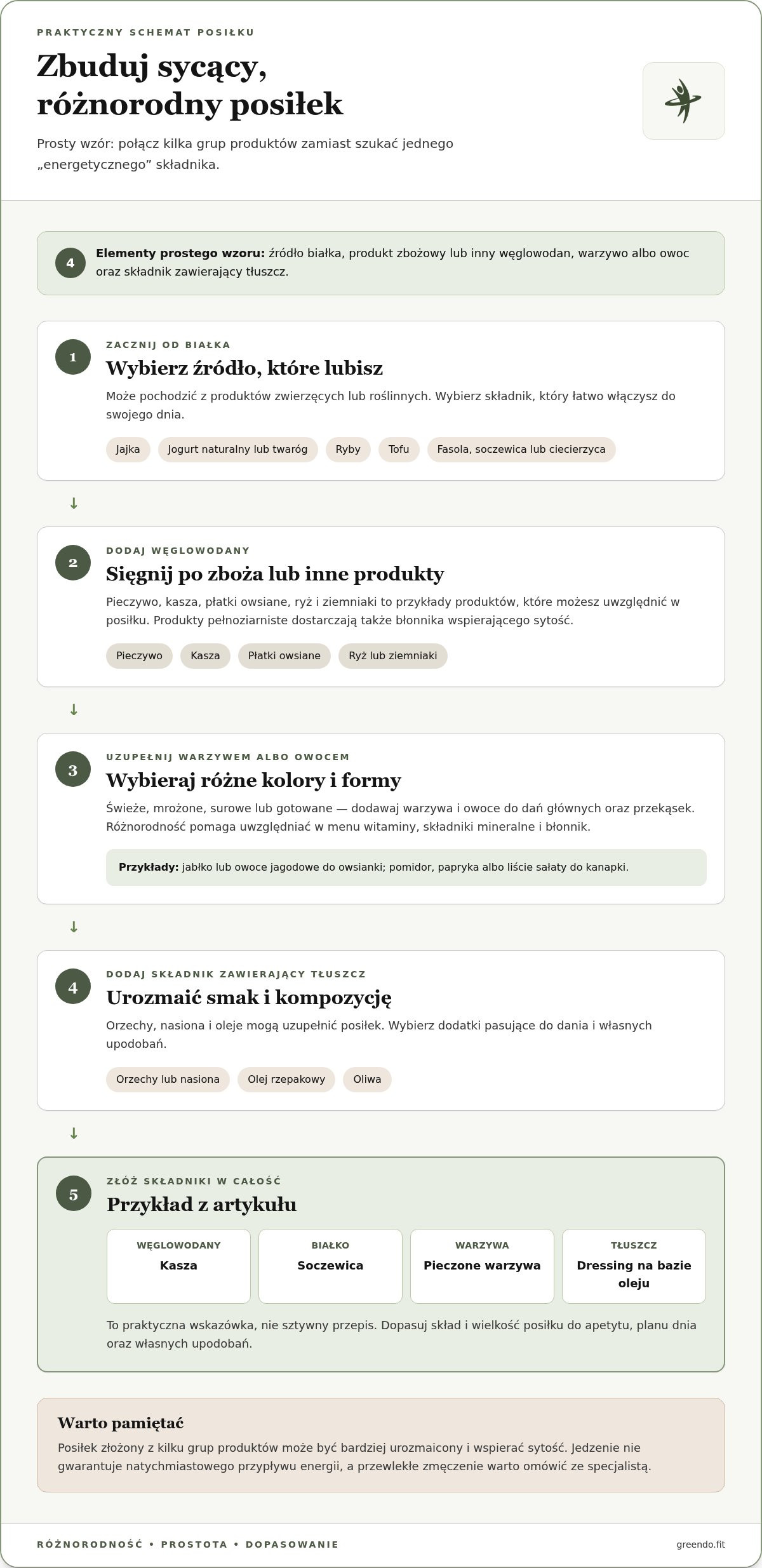
You can find protein in both animal and plant products. Choose from eggs, natural yogurt, cottage cheese, fish, tofu, beans, lentils, or chickpeas. Carbohydrates can come from bread, groats, oatmeal, rice, or potatoes. Whole grain products also provide fiber, which supports satiety. Choose ingredients that you like and can easily incorporate into your day.
- Add yogurt or cottage cheese to your oatmeal, and choose an egg, bean paste, or fish for your sandwich.
- Combine groats, rice, or potatoes with tofu, legumes, an egg, or another source of protein.
- Add nuts and seeds to a salad or oatmeal. Canola oil or olive oil will work well as a dressing ingredient.
Fats from nuts, seeds, and oils diversify meals and provide energy. You do not have to eliminate any of these groups or stick to one set. Combine ingredients according to your preferences. For example, groats with lentils, roasted vegetables, and an oil-based dressing create a more varied meal than groats alone.
How to ensure you get vegetables, fruits, and minerals?
Choose vegetables and fruits in different colors and forms: fresh, frozen, raw, or cooked. Add them to main dishes and snacks. You can add an apple or berries to oatmeal, and tomato, pepper, or lettuce leaves to a sandwich. Variety makes it easier to include many vitamins, minerals, and fiber in your menu.
Iron and vitamin B12 have important functions in the body, but fatigue alone does not allow you to determine if any ingredient is lacking. Sources of iron include meat and legumes, and vitamin B12 is found mainly in products of animal origin. If you do not eat such products or are worried about your well-being, discuss your diet with a specialist instead of assuming a deficiency.
If you want to tailor your menu to your preferences and daily rhythm, take advantage of the individual VIP Diet Plan.
How to Compose Meals to Avoid Nutritional Chaos
You do not need complicated rules or a separate menu for each day. Use a simple formula: to a source of protein, add a grain product or another product providing carbohydrates, a vegetable or fruit, and an ingredient containing fat. This is a practical tip, not a rigid recipe. Adjust the size and composition of the meal to your appetite, daily schedule, and personal preferences.
Compare two versions of a meal. A plain bun may be convenient, but if you feel hungry again soon after eating it, try serving it with chickpea paste, vegetables, and a little olive oil. This is not about deeming bread as inappropriate. Combining several product groups can simply diversify the meal and increase its satiety. This is more practical than looking for a single product for energy.
When preparing your plate, check if it contains a source of protein, carbohydrates, a vegetable or fruit, and a bit of fat. You do not have to include all elements in every snack. This formula is meant to help you compose main meals, not create another list of requirements. If you are wondering what to eat for more energy after 35, start with one meal that is easiest to diversify.
What might a satisfying breakfast or lunch look like?
For a savory breakfast, prepare a tortilla with an egg, vegetables, and avocado paste. For lunch, baked potatoes with cottage cheese, a side salad, and seeds will work well. You can also combine skyr or soy yogurt with flakes, a pear, and nuts. Adjust each of these examples to your appetite and available products.
Apply a similar principle when you eat out. Choose a vegetable with your sandwich, and with a rice dish, check if it also contains a source of protein. You do not have to strive for the perfect composition. Treat this tip as a starting point that helps to diversify your meal at work and at home.
What to choose when hunger strikes between meals?
A snack can be helpful, but it is not a mandatory part of the day. If you feel like having something small, combine two ingredients, for example, a fruit with yogurt, vegetables with hummus, or rye crisps with cottage cheese. A sweet product can also find a place in your menu. Pay attention to whether the chosen snack satisfies your hunger or if you feel like eating something again after a while.
Not everyone needs to eat at the same times. Observe when you get hungry and how meals fit into your rhythm. If you want to tailor your menu to your needs, use the VIP Diet Plan.
How to Implement Changes in Eating and Drinking Daily
Changing the way you eat does not have to start with a complete kitchen overhaul or a ready-made menu. It is easier to maintain when it fits your daily rhythm and responds to a specific need. Instead of changing everything at once, go through a simple sequence: observe, plan, prepare, and assess how you feel. Lasting change starts with one habit that you can repeat.
Where to start with changing your daily menu?
For a few days, note when you eat, when you feel hungry, and at what time you notice an energy drop. This is not about judging yourself or determining the cause on your own, but about identifying recurring situations. Then choose one small change, for example, adding a source of protein to your breakfast, and see if it is easy to incorporate into your daily routine.
Make it easier for yourself by preparing ingredients that can be quickly combined: eggs, yogurt, oatmeal, bread, vegetables, or legumes. You do not have to plan every meal. Think about what will be useful for breakfast or lunch, and then adjust the ingredients to your appetite. This is a good start if you are asking what to eat for more energy after 35, but want to avoid a restrictive plan.
How to take care of drinks and breaks between meals?
Fluid needs are individual and can change depending on the weather, activity, and the course of the day. Drink regularly, guided by thirst and your own needs. You can keep water on hand at work or during daily errands to make it easier to remember to drink. There is no single schedule or meal plan suitable for everyone.
Coffee can be part of your day, but it does not replace a meal or remove the cause of fatigue. If you drink it because you have not had time to eat for a long time, it might be more helpful to prepare a simple meal or snack beforehand. Pay attention to your hunger and daily schedule, instead of forcing yourself to eat at set times. Breaks between meals do not have to look the same every day.
After implementing a change, assess whether it is convenient and how you feel. If it is difficult to maintain, simplify it or choose a different one. Briefly write down what you managed to apply and what is worth changing. This makes it easier to find your own rhythm without imposing rigid rules on yourself.
When Diet Is Not Enough and How to Approach Supplementation
A dietary supplement complements a normal menu, but it does not replace meals or treatment. If you feel tired, do not immediately assume you need a specific ingredient or product. Look at your daily habits, and if the weakness persists, discuss supplementation with a specialist. A product promising a quick burst of energy will not explain the cause of your poor well-being.
When should you consult a specialist about persistent fatigue?
Talk to a specialist if your fatigue does not go away, gets worse, or worries you. Its cause may require an individual assessment that cannot be replaced by a change in diet or a supplement. Describe how long you have been feeling weak and how it affects your daily functioning. You do not have to diagnose yourself or guess what your body is lacking. A specialist will help assess the situation and suggest further steps.
How to reasonably incorporate supplementation into your daily ritual?
The starting point remains a varied menu and habits that you can regularly maintain. If you are considering a supplement, check its composition, recommended use, and whether it meets your needs. Do not combine several products automatically or increase the recommended portion in hopes of a faster effect. Supplementation should be a thoughtful addition, not an attempt to replace food or a health consultation.
Forever Young combines whey protein isolate and beef collagen hydrolysate. The composition also includes vitamin C, biotin, and coenzyme Q10. This is information about the product's content, not a promise that the supplement will add energy or eliminate fatigue. If you are wondering what to eat for more energy after 35, remember that a supplement will not replace a well-composed meal.
An individual approach makes it easier to adapt the menu to your preferences and daily rhythm. The GREENDO VIP Diet Plan supports the achievement of body goals through an individually tailored nutrition program and professional advice. Treat habit changes and supplementation as part of a broader plan, not a quick fix for every drop in energy.
Start with a small step that suits you
You do not have to change your entire way of eating right away. Choose one thing that is easy to repeat: plan tomorrow's breakfast, prepare ingredients for lunch, or for a few days, note when you feel best. Observe what works for your rhythm. If fatigue does not subside or causes concern, talk to a specialist instead of expecting diet alone to solve every problem.
The question of what to eat for more energy after 35 does not have to lead to restrictions or the search for one perfect product. It can be the beginning of a calmer, more mindful approach to daily choices. A supplement can complement the menu, but it does not replace meals or an individual assessment of needs.
If you want to tailor your menu to your preferences and body goals, get to know the GREENDO VIP Diet Plan.
Frequently Asked Questions
Do you need to eat differently after 35 to have more energy?
There is no single diet that everyone must follow after the age of 35. Needs depend on activity, appetite, health status, and daily routine, among other things. When asking what to eat for more energy after 35, treat age as a context, not a reason for restrictions. Change your menu in response to your own needs, not just your age.
What to eat for breakfast to feel full longer?
Choose a breakfast that combines protein with other ingredients and suits your appetite. An example could be rye bread with cottage cheese, radish, and cucumber, or eggs with tomatoes and a slice of bread. If you prefer a warm meal in the morning, try millet groats with milk or soy drink, a plum, and pumpkin seeds. Observe which combination keeps you feeling full the longest.
Does coffee help when you lack energy?
Coffee can increase alertness for a while, but it does not replace rest or a meal. Pay attention to what time you drink it and whether it makes it harder for you to fall asleep later. If you reach for another cup because you have eaten little since morning, consider taking a break for a meal and a drink. The reaction to caffeine is individual, so be guided by your own well-being.
Can an iron deficiency be related to fatigue?
Yes, an iron deficiency can be related to fatigue, but weakness alone does not confirm its presence. Do not start iron supplementation based solely on how you feel. If you are concerned about a deficiency, talk to a specialist who will assess your situation and advise on further steps. In your daily menu, you can include various sources of iron, and combine plant-based products with vegetables or fruits containing vitamin C.
Can a supplement replace a meal when I don't have time to eat?
No, a dietary supplement does not replace a meal. If you are short on time, prepare simple food to take with you in advance, such as a sandwich with egg paste and a vegetable, or yogurt with flakes. A supplement can complement the diet according to its purpose, but it does not automatically provide a full meal. Choose a product tailored to your needs, not in the hope of a quick boost.
What to do if fatigue persists despite better eating?
Talk to a specialist if the fatigue persists, worsens, or starts to interfere with daily functioning. Prepare brief information about how long you have been feeling it, what your sleep is like, and whether you have noticed other changes in your well-being. Such details can help in an individual assessment of the situation. Do not assume that diet is the cause, and do not try to replace a consultation with more supplements.
Frequently Asked Questions
Do you need to eat differently after 35 to have more energy?
There is no single diet that everyone must follow after the age of 35. Needs depend on activity, appetite, health status, and daily routine, among other things. When asking what to eat for more energy after 35, treat age as a context, not a reason for restrictions. Change your menu in response to your own needs, not just your age.
What to eat for breakfast to feel full longer?
Choose a breakfast that combines protein with other ingredients and suits your appetite. An example could be rye bread with cottage cheese, radish, and cucumber, or eggs with tomatoes and a slice of bread. If you prefer a warm meal in the morning, try millet groats with milk or soy drink, a plum, and pumpkin seeds. Observe which combination keeps you feeling full the longest.
Does coffee help when you lack energy?
Coffee can increase alertness for a while, but it does not replace rest or a meal. Pay attention to what time you drink it and whether it makes it harder for you to fall asleep later. If you reach for another cup because you have eaten little since morning, consider taking a break for a meal and a drink. The reaction to caffeine is individual, so be guided by your own well-being.
Can an iron deficiency be related to fatigue?
Yes, an iron deficiency can be related to fatigue, but weakness alone does not confirm its presence. Do not start iron supplementation based solely on how you feel. If you are concerned about a deficiency, talk to a specialist who will assess your situation and advise on further steps. In your daily menu, you can include various sources of iron, and combine plant-based products with vegetables or fruits containing vitamin C.
Can a supplement replace a meal when I don't have time to eat?
No, a dietary supplement does not replace a meal. If you are short on time, prepare simple food to take with you in advance, such as a sandwich with egg paste and a vegetable, or yogurt with flakes. A supplement can complement the diet according to its purpose, but it does not automatically provide a full meal. Choose a product tailored to your needs, not in the hope of a quick boost.
What to do if fatigue persists despite better eating?
Talk to a specialist if the fatigue persists, worsens, or starts to interfere with daily functioning. Prepare brief information about how long you have been feeling it, what your sleep is like, and whether you have noticed other changes in your well-beng. Such details can help in an individual assessment of the situation. Do not assume that diet is the cause, and do not try to replace a consultation with more supplements.